
CABG Surgery in Delhi
CABG (Coronary Artery Bypass Grafting), commonly called heart bypass surgery, restores blood flow to the heart by routing a healthy vessel around blocked coronary arteries. It is the gold-standard treatment for severe or multi-vessel coronary artery disease.
Unlike angioplasty, which opens blockages using stents, bypass surgery (CABG) creates a new pathway for blood to flow around the blocked arteries using grafts from the patient’s own vessels. This makes it particularly effective for patients with multiple blockages, complex disease, or diabetes, where long-term outcomes are better with surgery.
Dr. Dinesh Kumar Mittal, Director and Head of Cardiothoracic and Vascular Surgery at Fortis Hospital, Shalimar Bagh, Delhi, is widely recognised for performing advanced open heart surgery in Delhi, including CABG, valve replacement, and complex cardiac procedures. He provides comprehensive evaluation and surgical management for coronary artery disease, focusing on achieving safe outcomes and structured recovery for each patient.
Request a Consultation
What Is CABG Surgery?
CABG (Coronary Artery Bypass Grafting) is a heart surgery that creates a new path for blood to flow around a blocked coronary artery. A healthy blood vessel from the chest, arm, or leg is used as a graft to bypass the blockage and restore oxygen supply to the heart muscle.
Coronary Artery Bypass Grafting (CABG) is a type of open-heart surgery used to treat coronary artery disease (CAD). In CAD, the arteries that supply blood to the heart become narrowed or blocked by plaque (fatty deposits). This is called atherosclerosis.
When the heart muscle does not receive enough oxygen-rich blood, patients may experience chest pain, breathlessness, fatigue, or a heart attack. CABG does not “clear” the blockage. Instead, it goes around it.
A healthy blood vessel, called a graft, is taken from one of three places:
- The internal mammary artery (inside the chest wall)
- The saphenous vein (from the leg)
- The radial artery (from the forearm)
One end of the graft is attached to the aorta, and the other end to the coronary artery below the blockage. Blood now has a new route. The heart gets the oxygen it needs, chest pain eases, and the risk of a future heart attack drops.
When Is CABG Surgery Required?
CABG is needed when the coronary arteries are severely blocked, and medicines or angioplasty cannot restore enough blood flow. Common triggers include left main artery disease, three-vessel blockage, diabetes with multi-vessel CAD, repeated angina, and a weak heart pumping function.
Your cardiologist may recommend heart bypass surgery when one or more of the following are true:
- Left main coronary artery disease, where the main artery feeding most of the heart is narrowed
- Triple vessel disease (all three major coronary arteries are blocked)
- Multi-vessel disease with diabetes, where CABG gives better survival than angioplasty
- Weak heart pumping function (low ejection fraction) caused by blocked arteries
- Repeated angina that does not settle with medicines
- Failed angioplasty or repeated stent blockage
- Emergency bypass after a complicated heart attack
Common Symptoms That Lead to a CABG Workup
- Chest pain or heaviness on walking, climbing stairs, or stress (angina)
- Breathlessness even with mild activity
- Unusual fatigue, especially in women and diabetics
- Pain spreading to the left arm, jaw, or back
- Sweating with chest discomfort
- Heart attack in the past with ongoing blockages
Risk factors that push patients toward CABG include smoking, uncontrolled diabetes, high blood pressure, high cholesterol, obesity, strong family history, and sedentary lifestyle. According to published reports, Indian patients also present with diffuse disease and smaller coronary vessels, which makes the surgeon’s experience even more important.
If you are unsure whether you need a bypass or a stent, this guide on CABG vs. angioplasty explains how the decision is made.
Types of CABG Surgery
There are four main types of CABG: on-pump CABG (using a heart-lung machine), off-pump or beating-heart CABG, minimally invasive CABG (MICS CABG) through a small chest incision, and robot-assisted CABG. The right type depends on the number of blockages, heart function, and overall health.
Modern cardiac surgery is no longer one-size-fits-all. Dr. Mittal selects the approach that gives the safest outcome for each patient.
- On-Pump CABG (Conventional CABG)
The traditional technique. The heart is temporarily stopped, and a heart-lung machine (cardiopulmonary bypass) takes over, pumping blood and delivering oxygen. The surgeon then works on a still, bloodless heart, which allows very precise grafting in complex cases.
- Off-Pump CABG (Beating-Heart Surgery)
In off-pump CABG, the surgery is done while the heart continues to beat. A stabilizer is used to steady the small section being operated on. According to an article in Springer on Early outcomes in patients undergoing off-pump coronary artery bypass grafting, nearly 60% of all CABG surgeries in India are off-pump, because it avoids the heart-lung machine and is often better suited for elderly patients, diabetics, or those with kidney or lung issues.
You can know more about this here: On-pump vs. off-pump CABG explained.
- Minimally Invasive CABG (MICS CABG)
Instead of opening the full breastbone, the surgeon works through a small 4-6 cm cut between the ribs on the left side of the chest. There is no bone cutting. Benefits include less pain, lower infection risk, smaller scar, and a shorter hospital stay, often just 2-3 days, with return to light work in about 10 days.
- Robot-Assisted CABG (TECAB)
The most advanced option. The surgeon performs the bypass through keyhole incisions using robotic arms, which allow high precision in tight spaces. This is suited to select patients and is done only at a few specialised centres in India.
- Total Arterial CABG
Instead of using leg veins, the surgeon uses only arterial grafts (internal mammary and radial artery). Arterial grafts last much longer than vein grafts, and bilateral internal mammary artery use is linked to the best 15-20 year survival. Read more: benefits of total arterial CABG.
CABG Surgery Procedure in Delhi
CABG surgery takes 3 to 6 hours. The patient is placed under general anaesthesia, the chest is opened, a healthy blood vessel is harvested, and the graft is stitched above and below the blocked artery. Blood flow is restored, the chest is closed, and the patient is shifted to the cardiac ICU.
Step 1: Pre-Surgery Workup
Before surgery, patients undergo an angiography, echocardiogram, ECG, blood tests, chest X-ray, and lung function tests. Medicines like blood thinners may be stopped for a few days. Diabetes, blood pressure, and kidney function are optimised.
Step 2: Anaesthesia
You are given general anaesthesia, so you stay asleep and feel nothing during the surgery. A breathing tube, urinary catheter, and monitoring lines are placed.
Step 3: Opening the Chest
For traditional CABG, the surgeon makes a vertical cut down the centre of the chest and carefully opens the breastbone (sternotomy). For MICS CABG, the cut is much smaller and placed between the ribs.
Step 4: Harvesting the Graft
While one team opens the chest, another harvests the graft vessel, usually the internal mammary artery, saphenous vein from the leg, or radial artery from the arm. Endoscopic vein harvesting is often used to leave smaller scars.
Step 5: Creating the Bypass
This is the core step. One end of the graft is stitched to the aorta, and the other end is stitched to the coronary artery beyond the blockage. If four arteries are blocked, four separate grafts are placed. This is called a quadruple bypass. Three grafts are triple bypasses; two are double bypasses.
Step 6: Restarting and Closing
In on-pump cases, the heart is gently restarted and weaned off the bypass machine. Blood flow through each graft is checked. The breastbone is wired back together, the chest is closed, and you are moved to the cardiac ICU.
The full procedure takes 3 to 6 hours, depending on the number of grafts and complexity.
CABG Surgery Cost in Delhi
The average CABG surgery cost in Delhi typically ranges from ₹1,50,000 to ₹4,50,000 for conventional bypass, and ₹4,50,000 to ₹7,00,000 for minimally invasive or robotic CABG. Final cost depends on the hospital, number of grafts, ICU stay, and the patient’s overall health.
Typical CABG cost ranges in Delhi and NCR:
| Type of CABG | Approximate Cost (INR) |
|---|---|
| On-pump (conventional) CABG | ₹2,00,000 to ₹3,50,000 |
| Off-pump CABG | ₹1,78,500 to ₹2,31,000 |
| Minimally invasive CABG (MICS) | ₹4,00,000 to ₹6,50,000 |
| Robotic CABG (TECAB) | ₹6,00,000 to ₹8,00,000 |
| Total arterial CABG | ₹3,50,000 to ₹5,50,000 |
At premium NCR hospitals such as Fortis, Max, Apollo, and Medanta, full international patient packages typically range from $5,500 to $8,000 for standard CABG.
Factors that change the final cost:
- Number of grafts (single, double, triple, quadruple bypass)
- On-pump versus off-pump versus minimally invasive approach
- ICU and ward stay duration
- Room category selected
- Pre-existing conditions such as diabetes, kidney disease, or poor lung function
- Implants such as an intra-aortic balloon pump, if needed
- Post-operative cardiac rehabilitation
Most Indian health insurance policies cover CABG under a cashless claims process. Ayushman Bharat and CGHS patients are also treated at empanelled centres. For a detailed breakdown, see the full cost guide.
Recovery After CABG Surgery
Most patients sit up the day after CABG, walk within 3 days, leave the hospital in 5 to 7 days, and return to light work by 4 to 6 weeks. Complete recovery, including full physical activity, usually takes 8 to 12 weeks when combined with cardiac rehabilitation.
Recovery after heart bypass surgery is planned in three phases.
Phase 1: In the Hospital (Day 0 to Day 7)
- Day 0-1 (ICU): Breathing tube removed within a few hours, continuous monitoring, gentle breathing exercises
- Day 1-2: Moved to the ward, sitting up, short-distance walking begins
- Day 3-5: Longer walks, chest physiotherapy, dietary guidance, medication training
- Day 5-7: Discharge planning if wound healing and vitals are stable
The average hospital stay is 5 to 7 days for conventional CABG and 2 to 4 days for MICS CABG.
Phase 2: First 6 Weeks at Home
- Walk daily on flat ground, increasing distance slowly
- Do not lift anything heavier than 5 kg
- No driving for 4-6 weeks (sternum is still healing)
- Keep the chest wound clean and dry
- Take medications exactly as prescribed
- Follow a heart-healthy diet
- Attend all review visits
You may feel tired, have mood swings, or notice your appetite taking time to return. All of this is normal.
Phase 3: Full Recovery (6 to 12 Weeks)
Most patients return to office work around week 6. Physical jobs may need 10-12 weeks. Cardiac rehabilitation reduces mortality by 20-30% in the first 1-2 years after CABG and is strongly recommended.
Long-Term Lifestyle
- Stop smoking permanently
- Keep LDL cholesterol below 70 mg/dL
- Control blood pressure and HbA1c
- Walk 30-45 minutes, five days a week
- Follow a diet rich in vegetables, whole grains, lean protein, and healthy fats
- Take aspirin, statin, and prescribed medicines lifelong unless your doctor advises otherwise
Risks and Complications of CABG Surgery
CABG is generally very safe, with serious complications in less than 3-5% of cases. Possible risks include bleeding, infection, arrhythmia (mostly atrial fibrillation), stroke, kidney strain, graft blockage, and breathing issues. Risk rises with older age, diabetes, kidney disease, and poor heart function.
Honest disclosure matters. No heart surgery is risk-free, but modern protocols have significantly reduced complication rates.
Possible short-term complications:
- Bleeding needing re-exploration (1-2%)
- Wound infection, especially in diabetics
- Atrial fibrillation (irregular heart rhythm), often temporary
- Stroke (under 2% in most centres)
- Kidney function disturbance
- Breathing problems, chest infection
- Pericardial effusion (fluid around the heart)
Longer-term concerns:
- Graft blockage: Vein grafts have a 10-year patency of roughly 50%, while arterial grafts (internal mammary) can stay open beyond 20 years.
- Progression of disease in native arteries if risk factors are not controlled
- Repeat procedure (redo CABG or angioplasty): Needed in about 36% of patients over 30 years, mostly due to disease progression
Risks are higher in patients with severe LV dysfunction, uncontrolled diabetes, advanced kidney disease, or emergency surgery. This is why careful pre-operative assessment and a surgeon with judgement matters as much as technical skill.
Why Choose Dr. Dinesh Kumar Mittal for CABG Surgery in Delhi?
Dr. Dinesh Kumar Mittal is a senior Cardiothoracic and Vascular Surgeon with 25+ years of experience and 10,000+ surgeries performed. He offers on-pump, off-pump, and minimally invasive CABG at Fortis Hospital, Shalimar Bagh, with a patient-first approach focused on safe outcomes and complete recovery.
Choosing the right surgeon is the single biggest decision a bypass patient makes. Here is what sets Dr. Mittal apart:
- 25+ years in cardiothoracic and vascular surgery, across adult, paediatric, and neonatal heart care
- 10,000+ cardiac surgeries performed, including complex multi-vessel CABG, redo bypass, and CABG with valve surgery
- Expertise in off-pump (beating-heart) CABG and total arterial revascularisation for better long-term graft life
- Operates at Fortis Hospital, Shalimar Bagh, a NABH-accredited multi-specialty centre with dedicated cardiac ICUs, modular OTs, and 24/7 emergency backup
- Pioneered programmes including North India’s Aortic Intervention Programme and a dedicated Neonatal Cardiac Surgery Program
- Evidence-based, honest counselling: patients are told clearly when angioplasty is a better option and when CABG is the right call
- Full-spectrum cardiac care, including open heart surgery, valve replacement, aneurysm repair, and ECMO support
Heart Bypass Surgery in India for International Patients: Complete Care & Support
Delhi has become a trusted destination for heart bypass surgery in India, particularly for patients travelling from the Middle East, Africa, SAARC countries, and Southeast Asia. Patients choose Delhi not only for clinical outcomes, but for the structured, end-to-end support that makes treatment abroad manageable and predictable.
Patients travelling to Delhi for open heart surgery under Dr Dinesh Kumar Mittal receive:
- Cost advantage without compromising quality: The CABG surgery cost in delhi is significantly lower than in the UK, USA, or GCC countries, often by 60-80%, while maintaining international standards of surgical care, advanced ICU support, and experienced cardiac surgeons in Delhi
- Pre-arrival clinical review: Angiography reports and medical history are assessed via video consultation, so the treatment plan is clear before travel
- Medical visa assistance: Formal medical visa invitation letters and documentation support for a smooth visa process
- Transparent cost estimates: A detailed breakdown of CABG surgery cost in India, including surgery, ICU stay, medications, and follow-up
- Airport pickup and stay arrangements: Assistance with airport transfers and accommodation near Fortis Hospital, Shalimar Bagh
- Language support: Translators available on request (Arabic, French, Russian, Bengali, and others)
- Coordinated hospital care: Dedicated team support from admission through discharge
- Post-surgery follow-up: Ongoing recovery monitoring via WhatsApp and tele-consultation after returning home
- Continuity of care: Coordination with your home-country cardiologist to ensure seamless long-term management
For international patients, the focus is not just on the surgery, but on making the entire journey, from diagnosis to recovery, as smooth and well-supported as possible.
Click here to connect and begin your remote assessment.
Book a Consultation for CABG Surgery in Delhi
Coronary artery disease often progresses silently until symptoms like chest pain, breathlessness, or fatigue begin to interfere with daily life. Whether you have been advised angioplasty, are exploring CABG surgery in India, or want a second opinion on your reports, a specialist consultation is the most important next step.
During your consultation with Dr Dinesh Kumar Mittal, you will receive:
- A detailed review of your symptoms, medical history, and cardiac risk factors
- Evaluation of angiography, CT coronary angiography, ECG, and other cardiac reports
- Assessment of the severity and location of blockages, and whether bypass surgery (CABG) is required
- A clear comparison of treatment options, including angioplasty vs CABG surgery, and which is most appropriate for your condition
- An explanation of the CABG procedure, recovery timeline, risks, and expected outcomes
- Guidance on open heart surgery recovery time in India and what to expect post-surgery
- A personalised, written estimate of the bypass surgery cost in India, including hospital stay and follow-up
If you already have angiography or cardiac reports, bringing them to your first appointment allows for a more accurate and complete evaluation during the initial consultation.
Frequently Asked Questions
What is the success rate of CABG surgery in India? expand_more
The success rate of CABG surgery in India is very high, typically around 96-98% for first-time procedures. In-hospital survival rates range between 97% and 99%, making outcomes comparable to global standards.
Is CABG surgery painful? expand_more
Patients do not feel pain during heart bypass surgery because it is performed under general anaesthesia. Some discomfort may occur during recovery, which is managed with medication.
How long do bypass grafts last? expand_more
Many bypass grafts can last 10 to 20 years or longer, especially when patients maintain a healthy lifestyle and follow medical advice.
Is there an age limit for bypass surgery? expand_more
No fixed age limit. CABG is routinely performed in patients in their 70s and 80s when heart function and general health are reasonable. Age alone does not disqualify a patient; what matters more is kidney function, lung function, diabetes control, and frailty. Off-pump CABG is often preferred in elderly patients.
How do I book a consultation with Dr. Dinesh Kumar Mittal? expand_more
You can book an appointment with Dr. Dinesh Kumar Mittal by contacting Fortis Hospital, Shalimar Bagh, directly or through the online appointment booking facility.

Dr. Dinesh Kumar Mittal's Content Team
Dr. Dinesh Kumar Mittal's medical content team specialises in creating accurate, clear, and patient-focused healthcare content. With strong clinical understanding and expertise in technical writing and SEO, the team translates complex medical information into reliable, accessible resources that support informed decisions and uphold Dr. Mittal's commitment to quality care.
This content is reviewed by Dr. Dinesh Kumar Mittal

Related Blogs
Heart Surgery in India for International Patients: A Complete Guide
Every year, patients from the UK, the USA, the Gulf, and Africa fly into Delhi…
Read Article →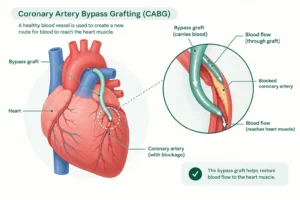
Heart Bypass Surgery Success Rate
Heart bypass surgery (CABG) has a 95-98%+ success rate in planned, non-emergency cases. The 30-day…
Read Article →
ECG Test: What It Measures and Why It Matters?
Most people have had an ECG at some point, perhaps before a surgery, after chest…
Read Article →
Life After Heart Surgery: Recovery, Risks & What to Expect?
The surgery is done. The heart is beating. And now, sitting in a hospital ward…
Read Article →
CABG vs. Angioplasty: How Do You Know Which One You Actually Need?
If you or someone in your family has been told that the heart arteries are…
Read Article →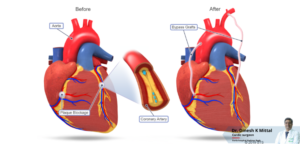
How is Total Arterial CABG Beneficial for Cardiac Wellness and Longevity of a Patient’s Life? – Dr. Dinesh Mittal
Cardiac wellness is vital in giving heart patients more longevity and better overall health.…
Read Article → WhatsApp