
Tetralogy of Fallot Treatment in Delhi
Tetralogy of Fallot (TOF) is a congenital heart condition that babies are born with, affecting approximately 4 in every 10,000 births. This condition occurs when structural abnormalities develop in the heart before birth, affecting how blood flows through the heart and lungs.
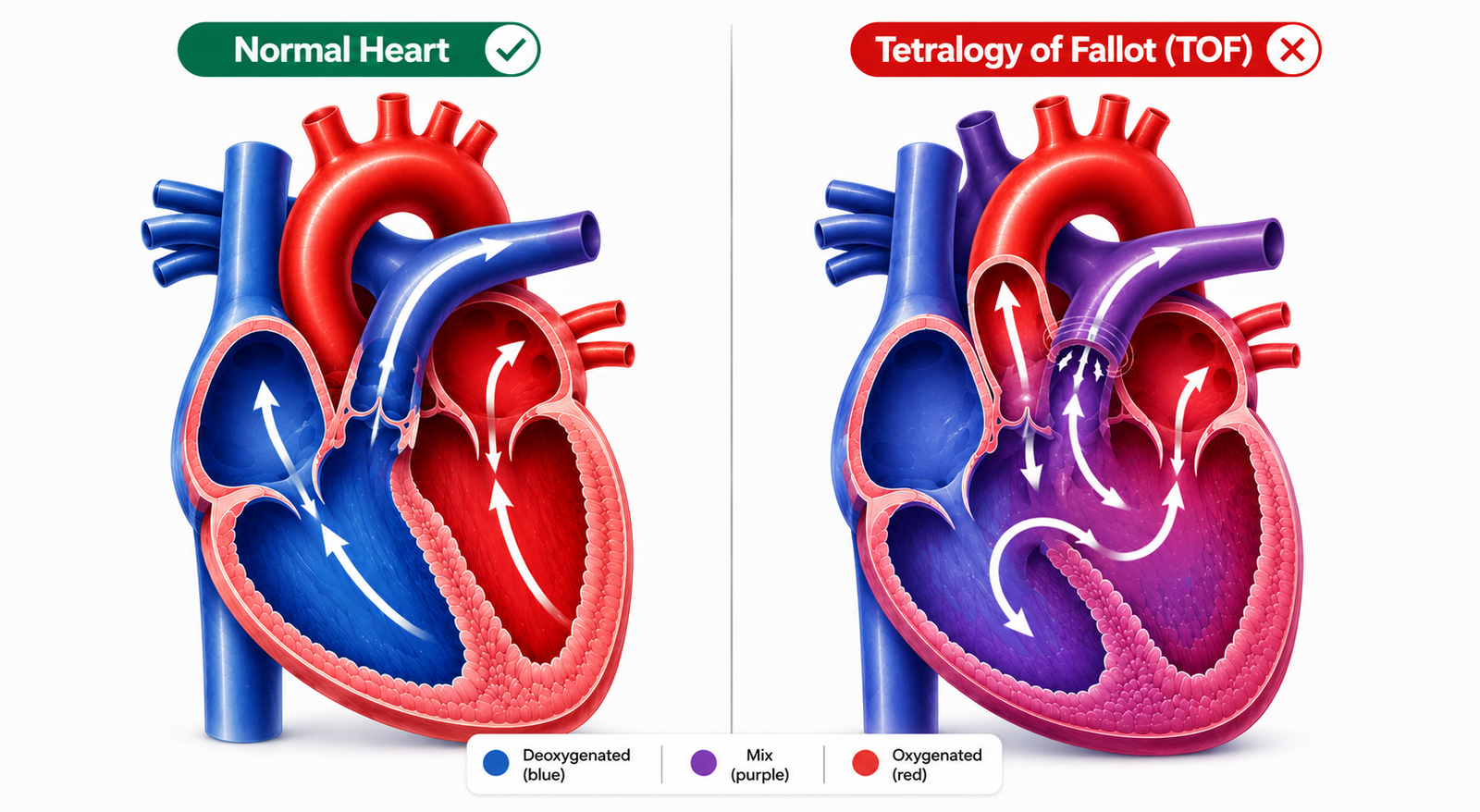
Some babies may not show symptoms immediately after birth, while others may develop noticeable signs early in life. Seeking Tetralogy of Fallot treatmnet at the right time is essential to correct the heart defects and improve oxygen circulation throughout the body.
Evaluation by an experienced paediatric cardiac surgeon at a specialised congenital heart disease hospital allows for accurate diagnosis and timely surgical planning. Families visiting a recognised CHD treatment centre benefit from advanced surgical care, specialised paediatric cardiac teams, and improved recovery outcomes for children with congenital heart defects.
Request a Consultation
What Is Tetralogy of Fallot?
Tetralogy of Fallot is a complex congenital heart defect present at birth that affects the heart’s structure and reduces the amount of oxygen-rich blood circulating in the body.
In a healthy heart, blood flows through a structured pathway: oxygen-poor blood travels to the lungs to receive oxygen, and oxygen-rich blood is then pumped to the rest of the body. However, in babies with Tetralogy of Fallot, certain structural defects disrupt this process.
Due to these abnormalities, some oxygen-poor blood bypasses the lungs and flows directly into the body, causing cyanosis, a bluish discoloration of the skin, lips, or nails.
Tetralogy of Fallot pathophysiology explains why affected babies develop cyanosis: the combination of a ventricular septal defect and pulmonary stenosis forces oxygen-poor blood to bypass the lungs and enter the body’s circulation directly through the overriding aorta. The degree of pulmonary stenosis largely determines how severe the oxygen deprivation becomes; the tighter the obstruction, the less blood reaches the lungs, and the more pronounced the cyanosis.
Parents who notice such symptoms should consult a child heart specialist for early evaluation and diagnosis.
The Four Components of Tetralogy of Fallot
The components of tetralogy of fallot are four co-existing structural abnormalities that are always present together: a ventricular septal defect, pulmonary stenosis, an overriding aorta, and right ventricular hypertrophy. Understanding each component helps explain the tetralogy of fallot pathophysiology and why surgical correction addresses all four defects simultaneously.
The four defects include:
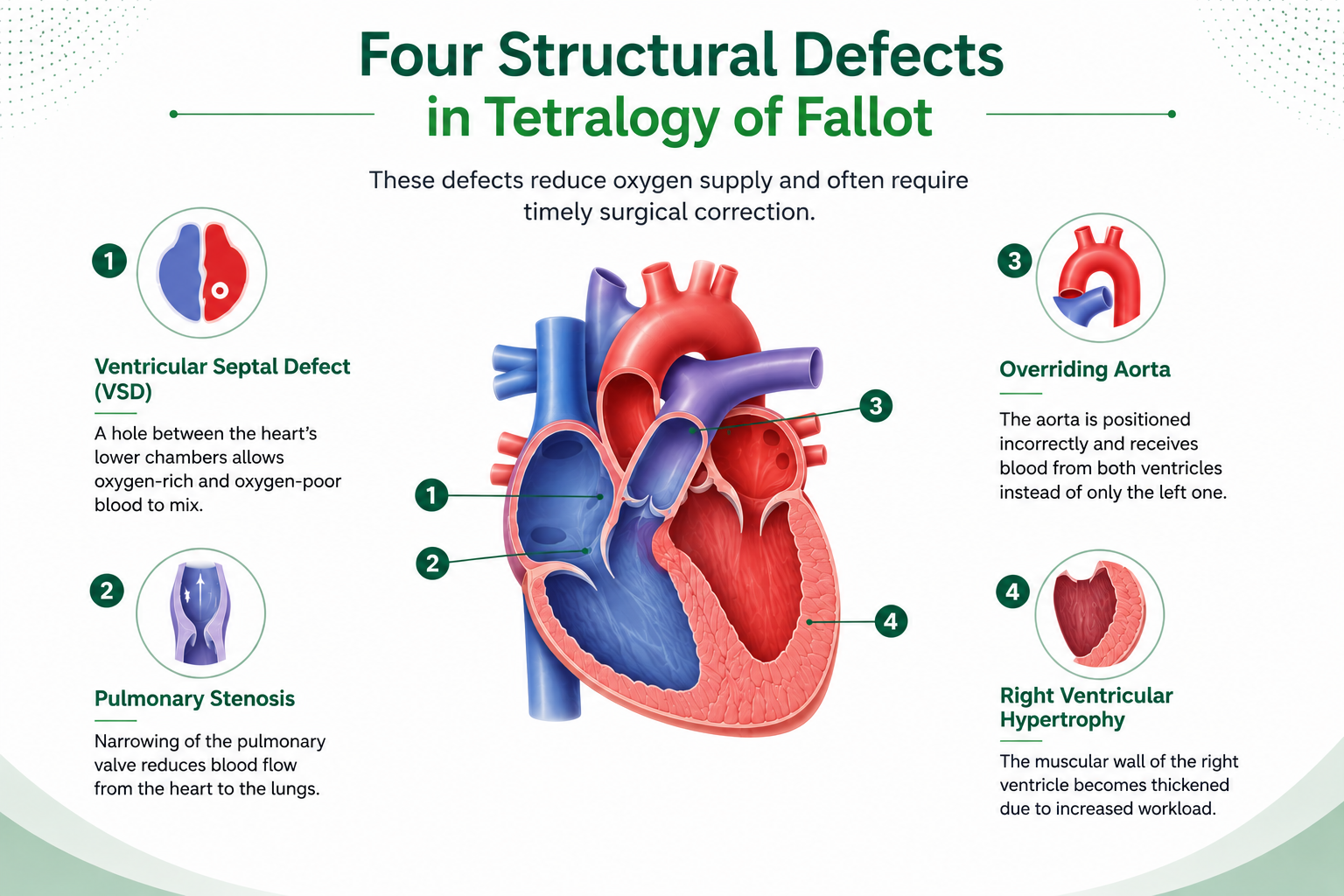
When these four defects occur together, they interfere with the heart’s ability to pump oxygen-rich blood effectively throughout the body. Together, these abnormalities disrupt oxygen delivery and require evaluation by specialists performing paediatric heart surgery.
Symptoms of Tetralogy of Fallot
The symptoms of Tetralogy of Fallot vary depending on the severity of the defects and the amount of oxygen reaching the body. In many cases, symptoms appear during infancy or early childhood.
Common symptoms include:
- Bluish skin or lips (cyanosis)
- Difficulty feeding
- Rapid breathing
- Fatigue
- Poor weight gain
- Delayed growth
Without treatment, these symptoms may worsen over time. Getting your child checked at a specialised CHD treatment centre helps doctors understand the condition and decide the most suitable treatment.
Tet Spells
Some infants with untreated Tetralogy of Fallot may experience sudden episodes called Tet spells, which occur when blood oxygen levels drop rapidly. Tet spells can be as short as a few minutes to as long as several hours. Your baby may sleep a lot after a tet spell.
These episodes may occur during crying, feeding, or bowel movements.
Signs of a Tet spell include:
- Very blue skin or lips
- Difficulty breathing
- Extreme fatigue
- Restlessness
- Limp body
- Fainting or loss of consciousness
- Convulsions
- Temporary inability to move one side of the body
Other symptoms and signs include:
- Fainting
- A heart murmur you can hear through a stethoscope
- Seizures
- Not much desire to eat
- Dizziness
- Gaining weight slowly
These episodes can become serious if oxygen levels drop significantly and may put the baby at risk. Tet spells require immediate medical attention at a specialised paediatric cardiac centre in Delhi. Babies with Tet spells may also be evaluated for Blue Baby Syndrome, a related cyanotic condition.
Symptoms of Tetralogy of Fallot in Adults
Certain congenital heart conditions may remain undetected for years, especially if symptoms are mild during childhood. Although most patients undergo surgery during childhood, some individuals may reach adulthood before diagnosis.
Symptoms in adults may include:
- Bluish skin tone
- Difficulty exercising
- Chest pain
- Heart palpitations
- Dizziness
- Fainting episodes
Persistent symptoms can indicate reduced oxygen circulation or underlying heart strain. Adults experiencing such symptoms should consult a congenital heart specialist for evaluation and management.
Tetralogy of Fallot Causes and Risk Factors
Tetralogy of Fallot causes are not always identifiable in individual cases. The condition arises from abnormal development of the heart’s outflow tract during the first eight weeks of pregnancy. Whilst a single definitive cause is rarely found, research points to a combination of genetic and environmental factors that disrupt normal cardiac formation.
These include:
- Genetic abnormalities
- Maternal infections during pregnancy
- Poor maternal nutrition
- Maternal diabetes
- Family history of congenital heart disease
Understanding these risk factors can help doctors monitor pregnancies more closely and detect potential concerns early. Timely diagnosis at a specialised congenital heart disease hospital helps ensure better treatment outcomes.
Diagnosis at a Specialised CHD Treatment Centre in Delhi NCR
Identifying the condition early helps doctors understand the heart’s structure and how blood flows through it. Accurate diagnosis is essential for planning treatment for Tetralogy of Fallot in Delhi NCR.
Doctors may recommend the following tests:
- Echocardiography
- Pulse oximetry
- Cardiac catheterisation
- Electrocardiogram (ECG)
- Blood tests
These tests provide a detailed view of the heart and detect structural abnormalities that affect blood circulation. Once the test results are reviewed, a CHD specialist in Delhi NCR can guide families on the most appropriate treatment and next steps.\
According to data published by the National Centre for Cardiovascular Diseases, India, outcomes for TOF repair at specialist paediatric cardiac centres have improved considerably over the past decade, with surgical mortality at experienced tertiary units now closely approaching international benchmarks.
Tetralogy of Fallot Treatment Options
The treatment approach for Tetralogy of Fallot depends on the severity of the heart defects and the child’s overall health. The primary treatment for TOF is surgical correction, typically performed by an experienced paediatric cardiac surgeon.
Treatment generally includes two phases.
Medical Stabilisation
Before surgery, doctors may stabilise the baby’s condition using:
- Oxygen therapy
- Medications
- Monitoring in specialised cardiac care units
These measures help improve oxygen levels and prepare the child for surgery.
Surgical Treatment
Tetralogy of Fallot surgery focuses on correcting the structural defects and restoring proper blood flow.
Surgical options include:
- Complete corrective heart surgery
- Open-heart surgery to repair structural defects
- Neonatal cardiac surgery in severe cases
Parents often search for the best hospital for paediatric heart surgery when planning treatment for their child.
Corrective surgery is performed as part of congenital cardiac surgery in Delhi, and significantly improves oxygen levels, allowing most children to grow and live active lives.
Tetralogy of Fallot Treatment Cost in Delhi?
The cost of Tetralogy of Fallot surgery in Delhi typically ranges between ₹2,50,000 and ₹6,00,000. However, the final cost depends on several medical and hospital-related factors.
The paediatric heart surgery cost in Delhi may vary depending on:
- Severity of the heart defect
- Surgical complexity
- Hospital facilities and infrastructure
- Duration of ICU stay
- Experience of the surgeon
Understanding these factors helps families plan the treatment process and associated medical expenses more effectively. Early diagnosis and treatment often help families access affordable congenital heart surgery in Delhi and improve overall outcomes.
Recovery and Survival After TOF Surgery
With modern medical advancements, outcomes for children born with Tetralogy of Fallot have improved significantly. Advances in surgical procedures have significantly improved the survival rate following Tetralogy of Fallot surgery in India.
Most children who undergo surgery:
- Recover well after treatment
- Experience improved oxygen levels
- Lead active and healthy lives
Regular monitoring plays an important role in maintaining long-term heart health after surgery. Follow-up care with a congenital heart specialist helps monitor heart function and support long-term recovery.
Why Choose Dr. Dinesh Kumar Mittal for Tetralogy of Fallot Treatment?
Choosing the right specialist is crucial when dealing with complex congenital heart conditions like Tetralogy of Fallot. Dr. Dinesh Kumar Mittal is recognised for his expertise in treating congenital heart defects in infants and children.
Reasons families consider him for care include:
- Extensive experience as an experienced CHD surgeon in India
- Expertise in Tetralogy of Fallot repair surgery
- Specialisation in paediatric heart surgery in Delhi
- Skilled in treating complex neonatal and infant heart conditions
- Patient-focused treatment planning with transparent communication
- Association with an advanced congenital heart disease hospital in Delhi
- Emphasis on safety, recovery, and long-term cardiac health
Families seeking a neonatal heart surgery specialist in Delhi benefit from comprehensive care, from diagnosis to surgery and long-term follow-up.
Book a Consultation for Tetralogy of Fallot Treatment in Delhi
If your child has been diagnosed with Tetralogy of Fallot, or if an antenatal scan or post-birth assessment has raised concern about a possible congenital heart defect, early specialist consultation is the most important step you can take.
Dr. Dinesh Kumar Mittal, Senior Cardiac and CTVS Surgeon at Fortis Hospital, Shalimar Bagh, has over 25 years of experience in paediatric and neonatal cardiac surgery, including complex TOF repair in infants and children across Delhi NCR.
During your consultation, you will receive:
- A complete clinical review of your child’s symptoms, growth, and oxygen levels
- Interpretation of any existing echocardiogram, pulse oximetry, or cardiac catheterisation reports
- Assessment of the tetralogy of fallot causes and individual risk profile
- A detailed explanation of the four components and how they are affecting your child’s circulation
- A personalised surgical plan, whether complete corrective repair or a staged approach
- Transparent discussion of the procedure, recovery, follow-up requirements, and cost
- For families outside Delhi, a remote pre-travel assessment is available, share your child’s echocardiogram and diagnostic reports for an early specialist opinion before arranging travel
Early diagnosis and timely surgery give children born with Tetralogy of Fallot the best possible chance of a healthy, active life. Do not delay seeking a specialist opinion if symptoms have been noticed or a congenital heart defect has been flagged.
Frequently Asked Questions
At what age should Tetralogy of Fallot surgery be done? expand_more
In most cases, corrective surgery is performed during infancy, often between 3 and 12 months of age. However, the exact timing depends on the severity of the condition and the child’s overall health.
Can children live a normal life after Tetralogy of Fallot surgery? expand_more
Yes. With successful surgical repair and regular follow-up care, many children with Tetralogy of Fallot go on to lead healthy, active lives with minimal limitations.
How long does recovery take after TOF surgery? expand_more
Recovery after Tetralogy of Fallot surgery usually takes several weeks. Most children stay in the hospital for about one to two weeks after surgery and gradually return to normal activities over time.
Is Tetralogy of Fallot surgery safe for newborns? expand_more
Yes, neonatal heart surgery for severe Tetralogy of Fallot can be safely performed by experienced paediatric cardiac surgeons at specialised congenital heart centres.
Do adults with repaired Tetralogy of Fallot need lifelong checkups? expand_more
Yes. Even after successful repair, patients should continue regular follow-ups with a congenital heart specialist to monitor heart function and detect any long-term complications.

Dr. Dinesh Mittal's Medical Content Team
Dr. Dinesh Kumar Mittal’s medical content team creates clear, reliable, and patient-friendly healthcare information. With a strong understanding of medical concepts and experience in health writing and SEO, the team simplifies complex topics into easy-to-read content. Each resource is designed to help patients better understand their care options and make informed decisions, while aligning with Dr. Mittal’s commitment to quality and transparency in patient care.
This content is reviewed by Dr. Dinesh Kumar Mittal
Related Blogs

Preparing for Tetralogy of Fallot Repair: What to Expect?
Tetralogy of Fallot is one of the most common congenital heart defects, accounting for…
Read Article → WhatsApp