
Congenital Heart Disease Treatment in Delhi
Access to Congenital Heart Disease Treatment in Delhi is critical for children and adults born with structural heart defects, where timely diagnosis and specialised surgical care can significantly improve survival and long-term quality of life.
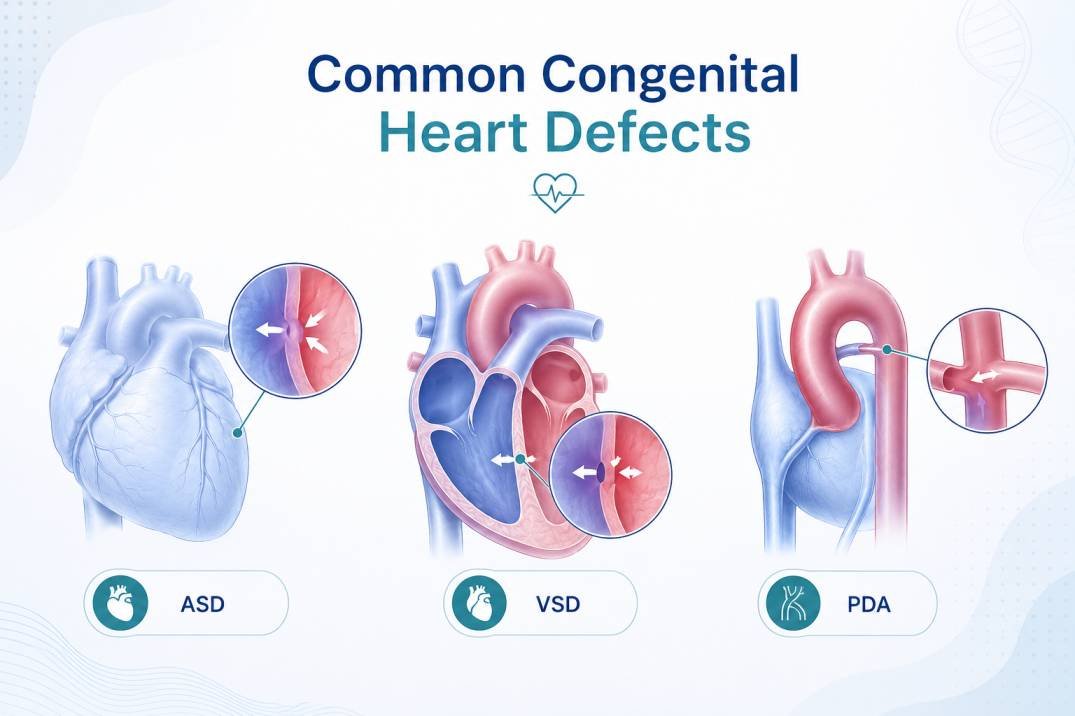
Congenital heart disease (CHD) is the most common category of birth defects in India, accounting for approximately 28% of all congenital malformations.An estimated 240,000 children are born with CHD in India every year, reflecting a birth prevalence of around 9 per 1,000 live births. Of these, nearly 50,000 children require surgical or catheter-based intervention during infancy. Despite these numbers, access to timely, high-quality congenital heart disease treatment remains concentrated in a handful of specialised centres. Early diagnosis and expert surgical care are the factors that most significantly determine outcomes.
Dr. Dinesh Kumar Mittal, Senior Cardiac and CTVS Surgeon at Fortis Hospital, Shalimar Bagh, Delhi, is a Pioneer of Neonatal Cardiac Surgery and Aortic Intervention in North India, with over 25 years of dedicated experience in congenital cardiac surgery across all age groups, from neonates to adults. He provides comprehensive evaluation and personalised treatment for the full spectrum of congenital heart conditions, including complex and rare defects.
Request a Consultation
What Is Congenital Heart Disease?
Congenital heart disease refers to any structural problem with the heart that develops during foetal growth. The term covers a wide range of conditions, from a small hole between two heart chambers that may close on its own, to complex multi-structure defects that require staged surgical repair beginning in the first days of life.
CHD affects the walls, valves, arteries, or veins of the heart. Depending on whether the defect disrupts the oxygen levels in the blood, conditions are broadly classified as acyanotic (normal blood oxygen) or cyanotic (reduced blood oxygen, often causing a bluish tinge to the skin).
Types of Congenital Heart Disease
Understanding which type of congenital heart defect is present is essential before any treatment can be planned. The most commonly treated conditions include:
Acyanotic (Non-Cyanotic) Congenital Heart Defects
These defects allow oxygenated and deoxygenated blood to mix, but blood oxygen levels remain near normal. They include:
- Ventricular Septal Defect (VSD): The most common congenital heart defect in India, present in approximately 5.7 per 1,000 live births in North Indian newborn screening studies. A hole in the wall between the two lower chambers allows blood to leak between them.
- Atrial Septal Defect (ASD): A hole in the wall separating the two upper chambers. Often diagnosed later in childhood or adulthood.
- Patent Ductus Arteriosus (PDA): A foetal blood vessel that fails to close after birth, allowing blood to bypass the lungs.
- Aortopulmonary (AP) Window: An abnormal connection between the aorta and pulmonary artery, requiring early surgical correction.
- Pulmonary Stenosis and Aortic Stenosis: Valve defects that obstruct blood flow out of the heart.
Cyanotic Congenital Heart Defects
These are more complex defects where deoxygenated blood bypasses the lungs and enters the body’s circulation, causing low blood oxygen and, in severe cases, a bluish colour of the lips, fingertips, or skin (cyanosis).
- Tetralogy of Fallot (ToF): the most common cyanotic congenital heart defect, involving four structural abnormalities.
- Transposition of the Great Arteries (TGA): The aorta and pulmonary artery are switched, requiring urgent surgical correction in the newborn period.
- Total Anomalous Pulmonary Venous Connection (TAPVC): The pulmonary veins drain abnormally, bypassing the left heart entirely.
- Tricuspid Atresia and Single Ventricle Defects: Conditions where one ventricle is absent or underdeveloped, requiring staged surgical palliation.
- Blue Baby Syndrome: A collective term for cyanotic conditions causing low oxygen in the newborn.
Congenital Heart Disease Symptoms: What to Look For?
Congenital heart disease symptoms vary considerably depending on the type and severity of the defect. Some infants present with obvious signs at birth; others are not diagnosed until childhood or even adulthood, when incidental findings on examination or investigation prompt further testing.
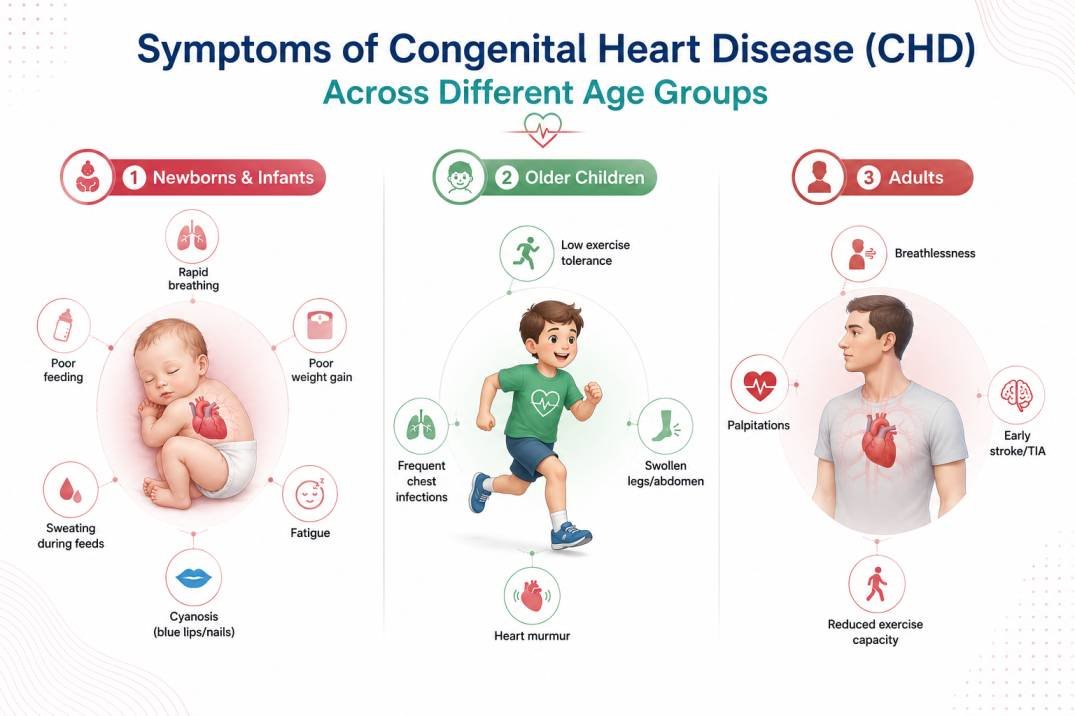
Not all congenital heart defects produce symptoms early on. A heart murmur detected by a doctor, or an abnormal finding on a chest X-ray or ECG, is often the first indication that further investigation is needed.
How Is Congenital Heart Disease Diagnosed?
Accurate Congenital Heart Disease diagnosis requires a combination of clinical assessment and specialist imaging.
After birth or at any age, the following investigations form the basis of CHD diagnosis:
- Echocardiography (2D Echo): The most important test for congenital heart disease. It uses ultrasound to create detailed images of the heart’s structure, walls, valves, and blood flow in real time. It is painless, safe at all ages, and provides the information needed to plan treatment.
- Chest X-Ray and ECG: Used to assess heart size, lung congestion, and the heart’s electrical activity.
- CT or MR Angiography: Provides detailed three-dimensional imaging of the heart and great vessels, particularly useful for complex defects or pre-operative planning.
- Pulse Oximetry: A simple, non-invasive test measuring blood oxygen saturation, used routinely in newborn screening.
- Cardiac Catheterisation: A catheter-based study providing direct pressure measurements and detailed anatomy, sometimes used for complex CHD or immediately before an interventional procedure.
A foetal echocardiogram performed at 18-22 weeks of pregnancy can detect many major structural defects before birth, allowing time for delivery planning at a centre equipped for neonatal cardiac care.
Congenital Heart Disease Treatment Options in Delhi
Congenital heart disease treatment is determined by the type of defect, the age and size of the patient, the severity of symptoms, and whether other cardiac abnormalities are present. The options range from watchful waiting for small defects, through catheter-based closure procedures, to complex open-heart and neonatal surgery.
1. Medical Management and Monitoring
Not all congenital heart defects require immediate intervention. Small VSDs often close spontaneously in early childhood. In the interim, or where surgery is not yet indicated, medical management focuses on supporting heart function and preventing complications. Medications such as diuretics, digoxin, and ACE inhibitors may be used to control symptoms and reduce the workload on the heart.
2. Catheter-Based (Interventional) Procedures
For suitable defects, minimally invasive catheter-based closure avoids open-heart surgery entirely. A thin tube is guided through the blood vessels to the heart, where a closure device is deployed across the defect.
- ASD Device Closure; for suitable secundum ASDs.
- PDA Device Closure; coil or device closure for persistent PDA.
- Balloon Valvuloplasty; for pulmonary or aortic valve stenosis, a balloon is used to open the narrowed valve without surgical incision.
- Pulmonary Artery Stenting; for narrowing of the pulmonary arteries after prior surgery.
3. Open-Heart Surgery
The majority of significant congenital heart defects require open-heart surgery, typically using cardiopulmonary bypass. The timing, sequence, and technique depend on the specific anatomy. Dr. Dinesh Kumar Mittal performs the full range of congenital cardiac operations, including:
- VSD and ASD Patch Repair: Closure of septal defects using a patch sutured in place.
- Total Correction of Tetralogy of Fallot: Repair of all four components, typically in infancy.
- Arterial Switch Operation: For Transposition of the Great Arteries, ideally within the first two weeks of life.
- TAPVC Repair: Reconnection of the pulmonary veins to the left atrium.
- Rastelli and Senning Procedures: For complex TGA with VSD and pulmonary stenosis.
- Fontan and Glenn Procedures: Staged palliation for single ventricle defects.
- Blalock-Taussig Shunt: An initial palliative procedure to increase blood flow to the lungs in cyanotic conditions.
- Heart Valve Repair or Replacement: For congenital valve abnormalities.
- Pacemaker Implantation: In children with heart block complicating CHD or surgery.
- ECMO Support: Used in critically ill neonates and infants requiring temporary heart and lung support during or after surgery.
Congenital Heart Disease Treatment Cost in Delhi
The cost of congenital heart disease treatment in Delhi varies significantly depending on the type and complexity of the defect, the surgical or interventional procedure required, the patient’s age and overall condition, and the duration of hospital stay including ICU care.
| Procedure | Approximate Cost (INR) |
| Echocardiogram + Pre-op Investigations | Starting ₹5,000 |
| ASD / PDA Device Closure | Starting ₹2,00,000 |
| VSD / ASD Open-Heart Repair | Starting ₹1,80,000 |
| Tetralogy of Fallot (Total Correction) | Starting ₹2,50,000 |
| Arterial Switch Operation (TGA) | Starting ₹3,00,000 |
| Complex Multi-Stage Repair (Fontan, Rastelli) | Starting ₹3,50,000 |
These are indicative ranges. A personalised cost estimate is provided after clinical evaluation and review of echocardiography and imaging reports.
Most health insurance policies in India, including government schemes, cover congenital heart disease surgery under inpatient hospitalisation benefits.
Cashless treatment may be available for eligible policyholders too.
Why Choose Dr. Dinesh Kumar Mittal for Congenital Heart Disease Treatment in Delhi?
At high-volume specialist centres, outcomes for standard repairs are now comparable to international benchmarks. Choosing the best heart surgeon with dedicated congenital cardiac experience, supported by appropriate infrastructure, is the single most important decision a family makes.
Dr. Dinesh Kumar Mittal is a recognised name in congenital cardiac surgery across North India, bringing:
- Pioneer of Neonatal Cardiac Surgery and Aortic Intervention in North India, with early surgical correction of complex defects that previously went untreated in this region.
- MCh in Cardiothoracic Surgery from AIIMS, New Delhi; India’s highest superspeciality surgical qualification.
- Fellowship in Endovascular Stenting, Milan, Italy; directly applicable to catheter-based congenital interventions.
- 10,000+ successful cardiac surgeries across all age groups, including neonates, infants, children, and adults with congenital heart disease.
- Comprehensive congenital cardiac care at Fortis Hospital, Shalimar Bagh; a NABH-accredited facility with dedicated cardiac operation theatres, paediatric cardiac ICU, ECMO support, and 24/7 emergency cardiac services.
- Personalised treatment approach; from watchful monitoring for mild defects to complex multi-stage surgical repair, each patient receives a treatment plan built around their specific anatomy, age, and clinical condition.
Book a Consultation for Congenital Heart Disease Treatment in Delhi
Whether a defect has been detected during a foetal scan, identified at birth, or discovered later in childhood or adulthood, specialist evaluation is the essential first step. Early assessment ensures that the right treatment is initiated at the right time, before complications such as pulmonary hypertension, heart failure, or developmental delay develop.
During your consultation with Dr. Dinesh Kumar Mittal, you will receive:
- A full review of echocardiography, CT angiography, or foetal echo reports.
- Assessment of defect type, severity, and timing for intervention.
- Evaluation of pulmonary pressures, heart function, and overall operative risk.
- Clear explanation of all treatment options; catheter-based, surgical, or monitoring.
- A personalised treatment plan with realistic timelines and recovery expectations.
- Transparent discussion of procedure, outcomes, and cost.
Remote pre-travel assessment available for international and outstation patients; share imaging reports before your visit.
Frequently Asked Questions
What is the most common congenital heart defect in India? expand_more
Ventricular Septal Defect (VSD) is the most commonly diagnosed congenital heart defect, followed by Atrial Septal Defect (ASD) and Patent Ductus Arteriosus (PDA). Acyanotic defects as a group are more prevalent than cyanotic conditions.
Can congenital heart disease be treated in adults? expand_more
Yes. Many adults live with undiagnosed congenital heart defects, particularly smaller ASDs or mild valve abnormalities.
At what age should congenital heart surgery be performed? expand_more
Timing depends on the specific defect and the child's condition. Critical defects such as TGA or severe ToF require correction within days or weeks of birth. Others, such as moderate VSDs or ASDs, are often repaired between six months and two years of age.
Is congenital heart disease covered under insurance in India? expand_more
Yes. Congenital heart disease surgery is covered under most health insurance policies in India as an inpatient surgical procedure. Families are advised to confirm pre-authorisation requirements and cashless eligibility with their insurer before the procedure.
How do I book a consultation with Dr. Dinesh Kumar Mittal? expand_more
You can book an appointment with Dr. Dinesh Kumar Mittal by contacting us directly via the number on the website or through our online appointment booking facility.

Dr. Dinesh Mittal's Medical Content Team
Dr. Dinesh Kumar Mittal’s medical content team creates clear, reliable, and patient-friendly healthcare information. With a strong understanding of medical concepts and experience in health writing and SEO, the team simplifies complex topics into easy-to-read content. Each resource is designed to help patients better understand their care options and make informed decisions, while aligning with Dr. Mittal’s commitment to quality and transparency in patient care.
This content is reviewed by Dr. Dinesh Kumar Mittal
Related Conditions

Related Blogs
Heart Surgery in India for International Patients: A Complete Guide
Every year, patients from the UK, the USA, the Gulf, and Africa fly into Delhi…
Read Article →
बच्चों में दिल की बीमारी: लक्षण, कारण और इलाज
जब किसी बच्चे को दिल से जुड़ी कोई परेशानी बताई जाती है, तो माता-पिता के…
Read Article →
Is Fontan Surgery the Right Choice for My Child’s Heart Condition?
When a child has a complex heart problem from birth, parents have to decide…
Read Article →
What Heart Defects Can Be Treated With The Glenn Procedure?
Congenital Heart Defects (CHD) are prevalent congenital disorders, affecting around 0.8% to 1.2% of…
Read Article →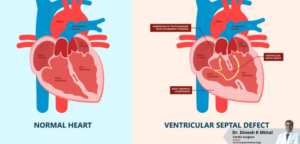
Can Pediatric VSD Closure Prevent Future Heart Complications? – Dr. Dinesh Mittal
Pediatric Ventricular Septal Defects (VSDs) are common heart problems in children with unusual holes…
Read Article →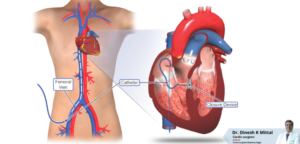
What Are the Various Treatment Options Available for VSD? – Dr. Dinesh Mittal
Ventricular Septal Defects (VSDs) are common heart problems since birth, causing a hole in…
Read Article → WhatsApp