
Aortopulmonary Window (AP Window) Treatment in Delhi
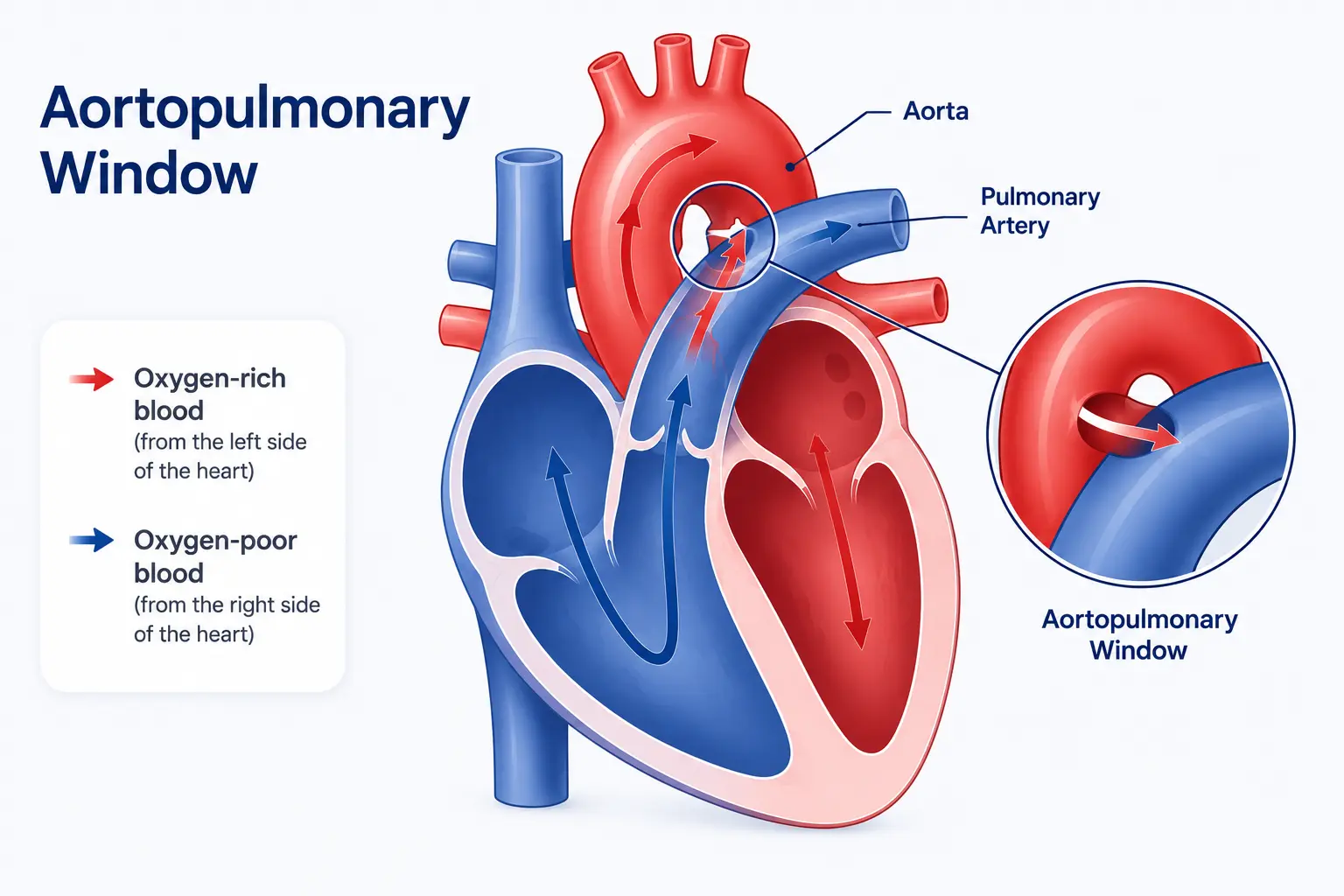
An aortopulmonary window is a rare congenital heart defect in which an abnormal opening connects the aorta and the pulmonary artery, two vessels that should remain completely separate. It accounts for roughly 0.1% to 0.6% of all congenital heart defects, making it one of the rarer conditions a paediatric cardiac team encounters, but also one where early, accurate diagnosis makes the biggest difference to outcome.
If your baby has been diagnosed with an AP window, or a paediatrician has flagged concerning symptoms, timely evaluation by an experienced congenital cardiac surgeon in Delhi is the most important next step. With the right surgical repair at the right time, most children go on to grow, feed, and develop normally.
Dr. Dinesh Kumar Mittal, Director and Head of Cardiothoracic and Vascular Surgery at Fortis Hospital, Shalimar Bagh, brings over 25 years of experience in congenital cardiac surgery, including complex AP window repair in neonates and infants. He holds an MCh in Cardiothoracic Surgery from AIIMS, New Delhi, and has performed over 10,000 cardiac surgeries, with a particular focus on safe, individualised surgical planning for the smallest and most vulnerable patients.
Request a Consultation
What is an Aortopulmonary Window?
An Aortopulmonary window is a rare but serious congenital heart defect in which an abnormal opening connects the aorta and the pulmonary artery. These two major blood vessels should remain separate. When they are connected, excess blood flows into the lungs, placing strain on the heart. This leads to:
- Increased blood flow to the lungs
- Extra workload on the heart
- Risk of early heart failure if untreated
This opening between the two major blood vessels does not close on its own and can put increasing strain on the heart and lungs over time. Since this is a structural problem present at birth, surgical correction is the definitive solution.
Aortopulmonary Window Signs and Symptoms
Aortopulmonary window symptoms usually appear within the first few weeks or months of life. The severity of these symptoms depends on the size of the opening.
Parents should consult a paediatric heart surgery hospital if they notice:
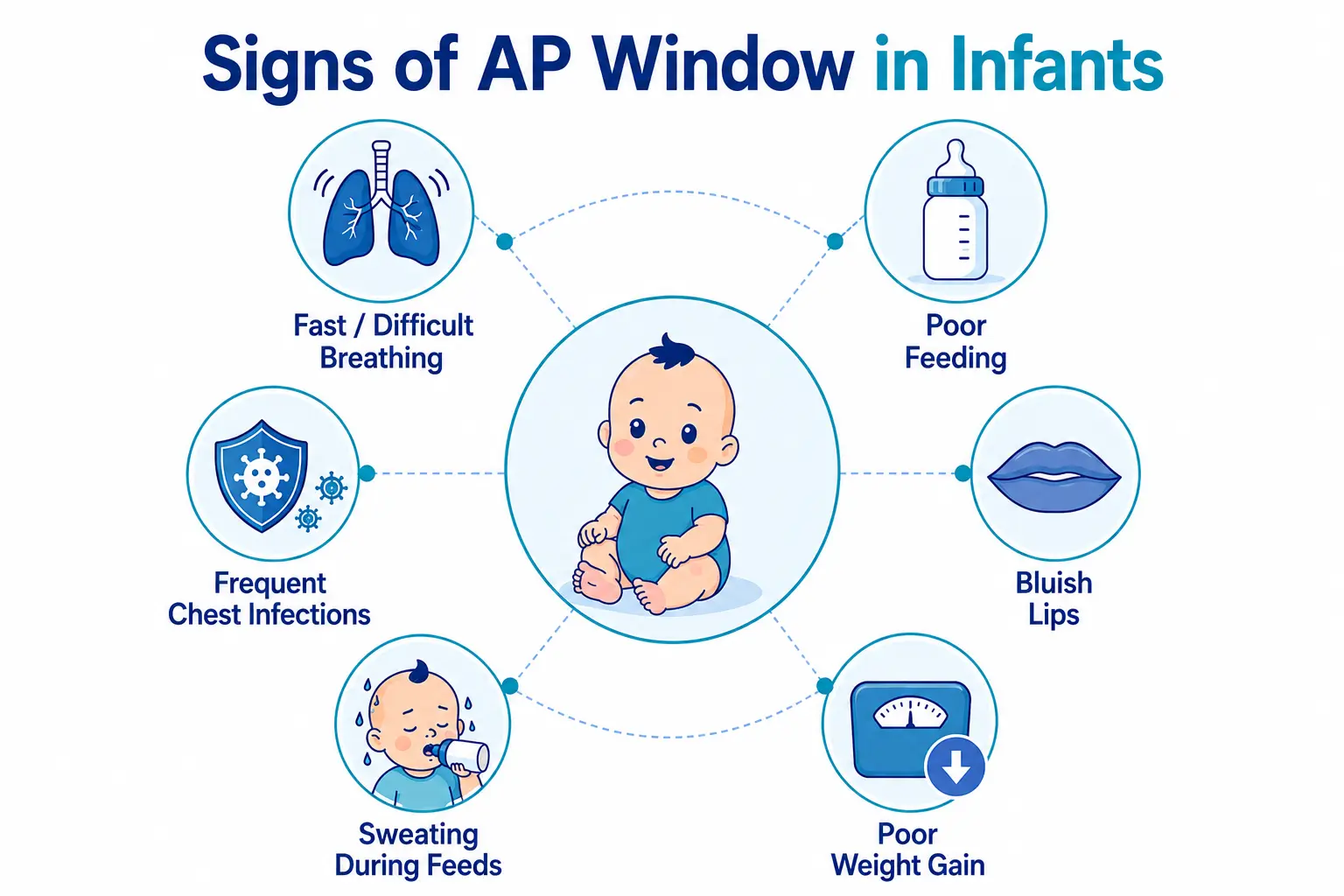
If your baby shows any of these symptoms, it is important not to delay medical consultation. Early evaluation at a recognised congenital cardiac treatment centre significantly improves outcomes.
Aortopulmonary Window Causes and Risk Factors
An Aortopulmonary window develops during fetal heart formation. While the exact cause is often unknown, possible risk factors include:
- Family history of heart defects
- Maternal diabetes
- Maternal obesity
- Smoking during pregnancy
- Genetic factors
Regular pregnancy check-ups and early comprehensive heart screening for your baby after birth can help detect this condition as soon as possible. This allows timely treatment and better outcomes.
AP Window Surgery in Delhi
Since this condition cannot close on its own and may worsen over time, medical treatment alone is not enough. The definitive treatment for this condition is AP window surgery.
During AP window repair surgery, the surgeon closes the abnormal opening between the aorta and pulmonary artery using a surgical patch or direct closure technique. This restores normal blood flow and prevents long-term damage.
The procedure is performed under general anaesthesia by a highly skilled cardiothoracic surgeon, experienced in advanced congenital heart surgery.
Depending on the baby’s condition, treatment may involve:
- Open surgical repair
- Specialised infant heart surgery
- Comprehensive ICU monitoring post-surgery
For safe and timely AP window repair surgery in Delhi, choosing a trusted paediatric heart surgery hospital and an experienced AP window specialist ensures the highest standards of care and the best possible outcome for your child. With timely intervention, most children go on to live healthy and active lives.
AP Window Treatment Cost in Delhi
The AP window treatment cost in Delhi NCR typically ranges between ₹3,50,000 to ₹6,50,000. This estimate generally includes hospitalisation, surgeon’s fees, anaesthesia, operating room charges, ICU stay, and basic post-operative care.
However, the final cost may vary depending on:
- Severity of the defect
- Associated heart conditions
- ICU stay duration
- Surgical complexity
- Hospital infrastructure
A detailed estimate is provided after evaluation at a specialised congenital cardiac treatment centre in Delhi NCR. Parents seeking affordable AP window surgery in Delhi NCR should consult an experienced AP window specialist for personalised estimates.
Why Choose Dr. Dinesh Kumar Mittal for Aortopulmonary Window Treatment?
When it comes to Aortopulmonary window treatment, choosing the right surgeon is one of the most important decisions for your child’s heart care. Dr. Dinesh Kumar Mittal is a highly experienced paediatric cardiac surgeon in Delhi NCR, known for managing complex congenital heart defects with precision and compassion.
Key Reasons Families Trust Him:
- Experienced AP window specialist in Delhi NCR
- Expertise in complex, advanced congenital heart surgery
- Performs procedures at leading paediatric heart surgery hospitals in Delhi NCR
- Individualised surgical planning for infants
- Transparent communication with parents
- Strong track record in successful AP window surgery
His approach combines surgical excellence with compassionate family support, ensuring both medical safety and emotional reassurance.
Book a Consultation for AP Window Treatment in Delhi
An aortopulmonary window does not close on its own, it requires surgical correction, and the earlier this is planned, the better the outcome for your child’s heart and lungs. Delaying evaluation can allow the extra blood flow to cause lasting strain, so an early opinion matters more than it might seem.
During your consultation, Dr. Dinesh Kumar Mittal will provide:
- Detailed review of your baby’s echocardiography and diagnostic reports
- Clinical assessment of symptom severity and overall cardiac function
- Clear explanation of the surgical repair approach best suited to your child’s anatomy
- Honest discussion of ICU care, expected hospital stay, and recovery timeline
- Transparent guidance on treatment cost and next steps
If your child has been diagnosed with an AP window, or you’ve noticed breathing difficulty, poor feeding, or bluish discolouration, getting a specialist opinion early gives your child the best chance at a healthy, active future.
Frequently Asked Questions
How is AP window diagnosed in newborn babies? expand_more
Diagnosis of the AP window in newborns is typically done through echocardiography (heart ultrasound). In some cases, additional imaging, such as a CT scan or cardiac catheterisation, may be recommended for detailed evaluation.
What is the recovery after AP window surgery in infants like? expand_more
Recovery after AP window surgery in infants usually involves a short ICU stay followed by monitored hospital recovery. Most babies gradually improve in feeding, breathing, and weight gain once normal blood flow is restored.
How long does a hospital stay last after AP window repair surgery? expand_more
The hospital stay after AP window repair surgery usually ranges from 5 to 10 days, depending on the baby’s recovery, ICU monitoring needs, and overall health condition.
What are the risks of an untreated Aortopulmonary window? expand_more
The risks of untreated Aortopulmonary window include heart failure, severe lung damage (pulmonary hypertension), poor growth, and life-threatening complications.
Will my child need lifelong follow-up after AP window surgery? expand_more
Yes, long-term follow-up after AP window surgery is important. Regular check-ups with a paediatric cardiologist help monitor heart function and ensure healthy growth as your child develops.

Dr. Dinesh Mittal's Medical Content Team
Dr. Dinesh Kumar Mittal’s medical content team creates clear, reliable, and patient-friendly healthcare information. With a strong understanding of medical concepts and experience in health writing and SEO, the team simplifies complex topics into easy-to-read content. Each resource is designed to help patients better understand their care options and make informed decisions, while aligning with Dr. Mittal’s commitment to quality and transparency in patient care.
This content is reviewed by Dr. Dinesh Kumar Mittal
 WhatsApp