
Blalock-Taussing Shunt Procedure in Delhi
When a newborn is born with serious congenital heart defects, the biggest concern is often low oxygen levels in the blood. The complex nature of CHDs presents significant challenges, affecting growth and development. In such critical situations, the BT Shunt, also known as the Blalock-Taussig Shunt, can be life-saving. This procedure is one of the most important advancements in paediatric cardiac surgery, offering a bridge to life-saving surgeries for these vulnerable infants, ultimately shaping the field and setting the stage for further advancements in the treatment of congenital heart conditions.
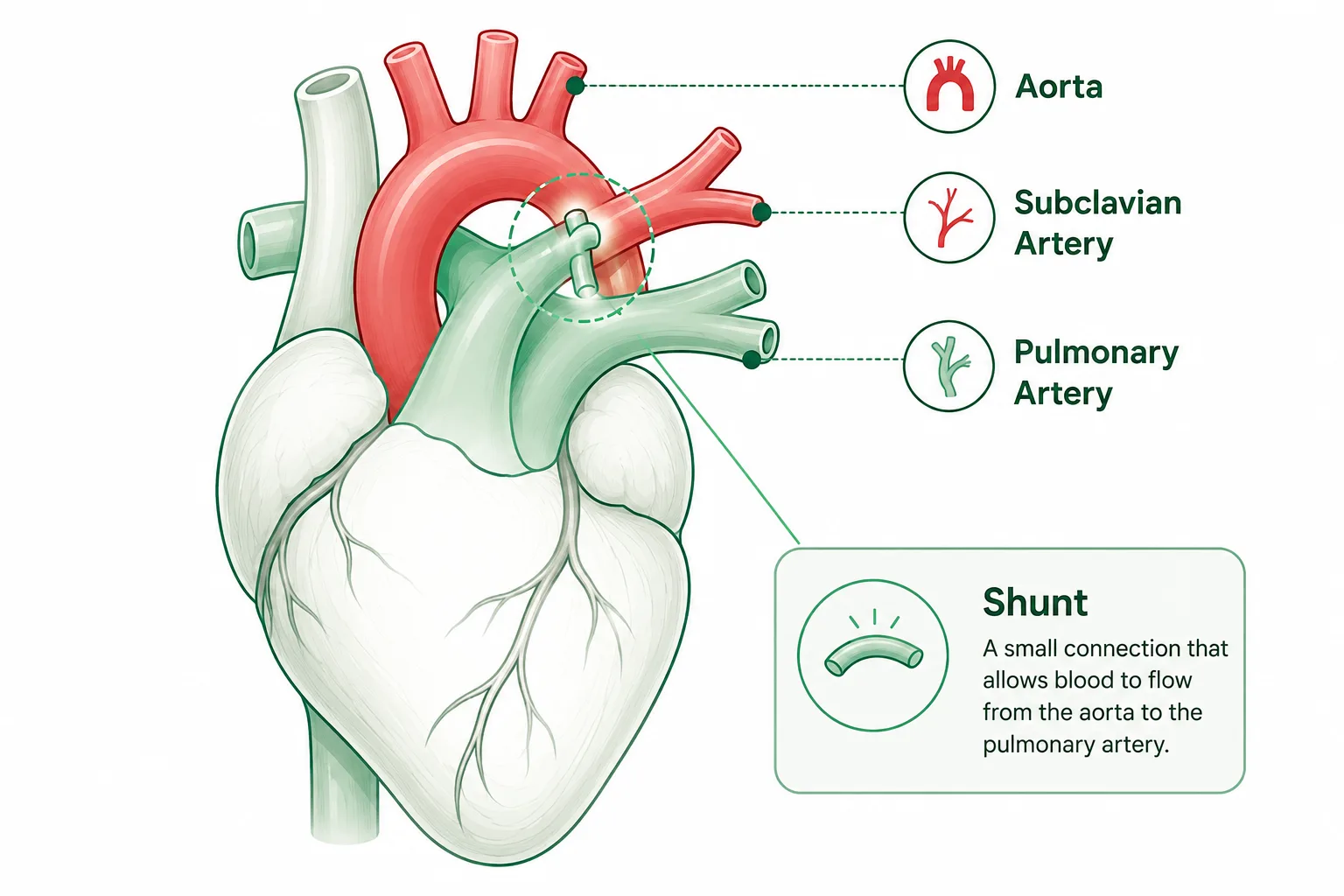
The shunt is not meant to be permanent. It is a temporary support that helps your baby stay stable and gain strength until the next stage of treatment. With a success rate of around 82%, it offers real hope and reassurance to parents during an otherwise overwhelming time.
Request a Consultation
What is the Blalock-Taussig Shunt?
The Blalock-Taussig Shunt is a small, soft tube that helps blood flow throughout the body. It is a temporary surgical procedure designed to improve oxygen levels in babies with complex heart conditions. In simple terms, it creates a small connection between a major artery and the pulmonary artery (which carries blood to the lungs). This allows more blood to reach the lungs, where it receives oxygen before circulating through the body.
The BT Shunt procedure acts as a “bridge”, stabilizing newborns until they are ready for a more permanent paediatric heart surgery. This helps infants with conditions like “blue baby syndrome” by allowing them to grow and gain strength before more extensive heart surgery. The BT Shunt is crucial in repairing complex heart defects in young children.
Why is a BT Shunt Needed?
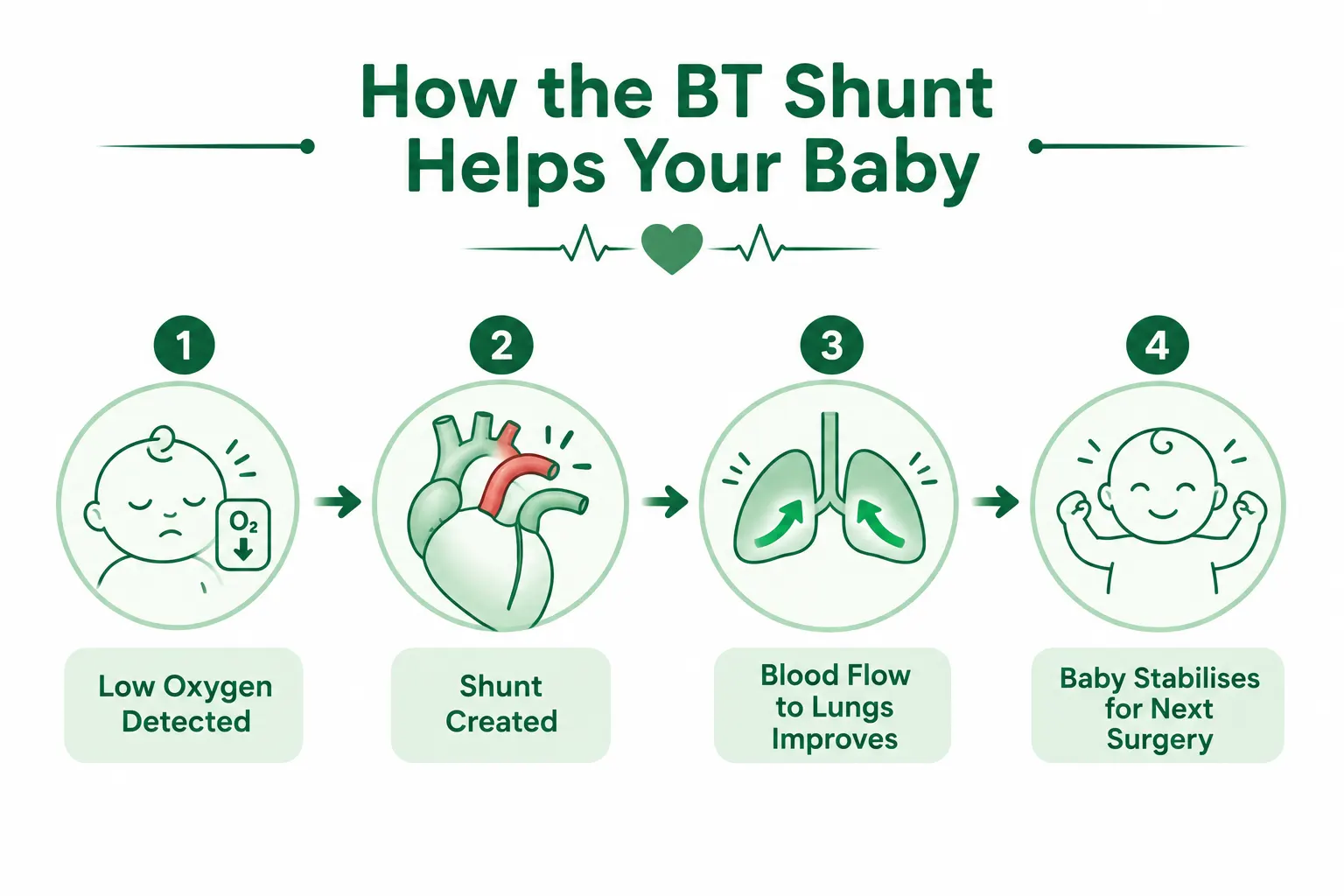
Some babies are born with heart defects that restrict blood flow to the lungs. As a result, oxygen levels drop significantly, sometimes leading to bluish discoloration of the skin, commonly known as blue baby syndrome.
In cases like these, immediate complete heart repair may not be safe. The BT Shunt provides:
- Improved oxygen supply
- Better weight gain
- Stabilization before corrective surgery
- Time for the baby to grow stronger
It is considered a crucial part of staged congenital heart defect treatment.
How the Procedure is Performed?
The procedure is performed under general anesthesia in a specialized paediatric cardiac operating room, with continuous and regular monitoring to ensure your baby’s safety at every step.
During BT Shunt surgery, the surgeon connects:
- The right subclavian artery (branch of the aorta)
- The right pulmonary artery
This allows oxygen-poor blood to flow into the lungs and become oxygen-rich.
The heart continues beating during the procedure, and in most cases, a heart-lung machine is not required. The shunt usually remains in place for about 4 to 5 months, after which definitive corrective surgery is planned.
Benefits of the BT Shunt Procedure
When a baby is too small or medically fragile for complete heart repair, this procedure provides a safe and effective solution.
The BT Shunt offers several advantages:
BT Shunt vs PDA Stent
In some infants, doctors may consider a PDA stent rather than a BT shunt as a treatment option.
Both approaches aim to improve oxygen levels. PDA stenting may reduce the length of ICU stay in selected cases. However, the BT Shunt remains a well-established and highly reliable procedure, especially in complex anatomical conditions.
The choice depends on a detailed evaluation by an experienced paediatric cardiologist.
BT Shunt Surgery Cost in Delhi
The average cost of BT Shunt Surgery in Delhi generally ranges between ₹1,80,000 to ₹4,00,000. This typically includes:
- Pre-operative investigations
- Surgeon’s fees
- Operation theatre charges
- ICU stay
- Hospitalisation
- Immediate post-operative care
The final cost may vary depending on:
- The baby’s condition
- Associated cardiac complications
- NICU requirements
- Length of hospital stay
- Surgeon’s expertise
Families can receive a transparent estimate after evaluation.
Aftercare and Monitoring
Proper aftercare following BT Shunt surgery is crucial.
Immediately after surgery, babies may require:
- Mechanical ventilation
- Chest drains
- Continuous ICU monitoring
- Careful fluid and urine monitoring
After discharge, parents are trained to monitor oxygen levels, feeding patterns, and overall health at home. Regular follow-ups with a paediatric cardiologist in Delhi are essential until the next surgical stage.
Risks and Complications of the BT Shunt Procedure
Like any cardiac surgery, the BT shunt carries some risks, though serious complications are uncommon when the procedure is performed by an experienced paediatric cardiac surgical team.
Possible risks include:
- Shunt blockage or clotting: The most closely monitored risk in the early days after surgery; babies are usually given blood-thinning medication to reduce this.
- Infection: At the incision site or, rarely, affecting the heart lining.
- Bleeding: During or shortly after the procedure.
- Fluid around the lungs or heart: Usually managed with drains during the ICU stay.
- Irregular heart rhythm: Can occur temporarily and is closely monitored.
- Too much or too little blood flow to the lungs: Requires careful sizing of the shunt during surgery, which is why experienced surgical judgement matters.
Most complications are identified and managed promptly within the ICU setting, and the overall safety profile of the BT shunt is well established in congenital cardiac surgery for infants who are not yet ready for full corrective surgery.
Why Choose Dr. Dinesh Kumar Mittal for the Blalock-Taussig Shunt Procedure?
Choosing the right surgeon is one of the most important decisions for your child’s heart care.
Dr. Dinesh Kumar Mittal is a highly experienced specialist in paediatric cardiac surgery, known for managing complex congenital heart defects in newborns and infants.
What Sets Him Apart:
- Extensive experience in performing BT Shunt surgery in Delhi
- Expertise in staged congenital heart defect treatment
- Careful patient selection between PDA stent vs BT shunt
- Advanced surgical planning for high-risk newborns
- Compassionate counselling for families
- Comprehensive pre- and post-operative monitoring
His approach focuses not just on surgery, but on long-term outcomes, growth, and quality of life.
Parents seeking the best paediatric cardiac surgeon for BT Shunt in Delhi often seek experienced specialists who combine surgical precision with compassionate neonatal care, a standard Dr. Mittal consistently upholds.
Book a Consultation for the BT Shunt Procedure in Delhi
A detailed evaluation by a paediatric cardiac specialist is the only way to confirm whether a BT shunt, PDA stent, or another staged approach is right for your child’s specific heart anatomy.
During your consultation with Dr. Dinesh Kumar Mittal, you will receive:
- A full review of your baby’s echocardiography and diagnostic reports
- Assessment of oxygen levels and overall cardiac function
- A clear explanation of whether a BT shunt or an alternative approach is appropriate
- Guidance on timing, ICU requirements, and expected hospital stay
- A transparent discussion of costs and next steps toward corrective surgery, such as the Glenn or Fontan procedures.
If your baby has been diagnosed with a congenital heart defect or shows signs of blue baby syndrome, early specialist consultation gives your child the best possible start toward long-term heart health.
Frequently Asked Questions
How does the BT Shunt work in babies? expand_more
The BT Shunt connects a major artery to the pulmonary artery, allowing more blood to reach the lungs for oxygenation. This helps babies with low oxygen levels stabilize and grow before definitive surgery.
What is the success rate of BT Shunt in infants? expand_more
The success rate of BT Shunt in infants ranges between 82% and 94%, depending on the baby’s overall condition and associated heart defects.
Is BT Shunt a temporary heart surgery for newborns with low oxygen? expand_more
Yes. It is considered a temporary heart surgery for newborns with low oxygen. The shunt acts as a bridge until the baby is strong enough for corrective open-heart surgery.
What is the cost of BT Shunt surgery in Delhi? expand_more
The Cost of BT Shunt Surgery in Delhi usually ranges between ₹1.8 lakh to ₹4 lakh, depending on the hospital, ICU stay, and the child’s medical condition.
Who is the best paediatric cardiac surgeon for BT Shunt in Delhi? expand_more
The best paediatric cardiac surgeon for BT Shunt in Delhi is one with specialized experience in neonatal heart surgery, advanced infrastructure support, and a multidisciplinary cardiac care team. Consultation and detailed evaluation help determine the right choice for your child.

Dr. Dinesh Kumar Mittal's Content Team
Dr. Dinesh Kumar Mittal's medical content team specialises in creating accurate, clear, and patient-focused healthcare content. With strong clinical understanding and expertise in technical writing and SEO, the team translates complex medical information into reliable, accessible resources that support informed decisions and uphold Dr. Mittal's commitment to quality care.
This content is reviewed by Dr. Dinesh Kumar Mittal
Related Blogs

The Blalock Heart Procedure: How It Works and Why It’s Essential
The Blalock heart procedure refers to the surgical technique that creates a connection between the…
Read Article → WhatsApp