
ECMO treatment cost in Delhi typically ranges from ₹6,00,000 to ₹12,00,000 or more for the total duration of support, depending on how long the patient requires ECMO, the type of ECMO circuit used, the complexity of the underlying condition, and the level of ICU care required throughout.
Dr. Dinesh Kumar Mittal, Senior Cardiac and CTVS Surgeon at Fortis Hospital, Shalimar Bagh, Delhi, has over 25 years of cardiothoracic and vascular surgical experience, including the management of complex cardiac and respiratory emergencies requiring ECMO support. His approach centres on precise patient selection, round-the-clock critical care, and transparent communication with families throughout what is often a deeply uncertain time.
ECMO Treatment Cost in Delhi: Overview
The total cost of ECMO treatment in Delhi is not a single fixed figure. Unlike elective cardiac surgeries, ECMO is a continuous life-support therapy, and costs accumulate daily for as long as support is required. The indicative cost ranges below reflect the full episode of care, including initiation, daily support, ICU stay, and weaning.
| ECMO Type | Indicative Cost Range (INR) |
| Veno-Venous (VV) ECMO – Respiratory Support | ₹6,00,000 – ₹12,00,000 |
| Veno-Arterial (VA) ECMO – Cardiac + Respiratory Support | ₹8,00,000 – ₹16,00,000 |
| Hybrid (VAV) ECMO – Complex Support | ₹10,00,000 – ₹20,00,000+ |
| ECMO for Neonates and Paediatric Patients | ₹5,00,000 – ₹14,00,000 |
| ECPR (ECMO-assisted Cardiopulmonary Resuscitation) | ₹7,00,000 – ₹15,00,000+ |
These are indicative ranges only. The final cost is confirmed after clinical evaluation, based on the patient’s condition, duration of support required, and hospital infrastructure used.
ECMO Cost in Delhi: Detailed Cost Breakdown
Understanding what contributes to the total cost helps families plan and avoid unexpected financial strain during an already difficult period.
1. Pre-Initiation Assessment and Investigation
Before ECMO can begin, a rapid yet thorough clinical assessment is conducted to confirm eligibility and safety.
| Investigation | Estimated Cost (INR) |
| Echocardiogram (2D Echo) | ₹2,000 – ₹5,000 |
| Electrocardiogram (ECG) | ₹300 – ₹800 |
| Chest X-Ray | ₹400 – ₹1,000 |
| Blood Tests (CBC, LFT, KFT, ABG, coagulation, viral markers) | ₹4,000 – ₹10,000 |
| CT Pulmonary Angiography / CT Chest (if required) | ₹8,000 – ₹18,000 |
| Coronary Angiography (if cardiac cause) | ₹12,000 – ₹30,000 |
Not all investigations are required for every patient. In emergency cases, the most critical assessments are performed in parallel with ECMO initiation.
2. ECMO Circuit, Cannulation, and Initiation
This covers the surgical cannulation procedure, the ECMO circuit components (oxygenator, tubing, pump head), and the specialist fees for initiating support. Initial circuit costs and cannulation typically range from ₹1,50,000 to ₹3,50,000.
3. Daily ICU Cost During ECMO Support
This is the largest and most variable component of total ECMO treatment cost. Daily charges cover:
| Service | Estimated Daily Cost (INR) |
| Cardiac or Respiratory ICU Bed | ₹15,000 – ₹35,000 |
| ECMO Circuit Running Cost (consumables, oxygenator changes) | ₹20,000 – ₹50,000 per day |
| Anticoagulation (Heparin infusion and monitoring) | ₹2,000 – ₹5,000 per day |
| Nursing (1:1 or 1:2 ECMO-trained nurse ratio) | Included in ICU charges |
| Medications (vasopressors, sedation, antibiotics) | ₹5,000 – ₹20,000 per day |
| Daily Investigations (ABG, CBC, coagulation, imaging) | ₹3,000 – ₹8,000 per day |
Most ECMO runs in India last between 5 and 21 days, though some patients require support for longer. According to data from the ECMO Society of India, the average duration of ECMO support in Indian centres varies considerably by indication and patient age.
4. Weaning, Decannulation, and Post-ECMO Care
Once the heart and lungs begin to recover, ECMO support is gradually reduced (weaned) and then removed. Decannulation and post-ECMO recovery costs include:
| Service | Estimated Cost (INR) |
| Decannulation and wound care | ₹15,000 – ₹40,000 |
| Continued ICU monitoring (post-ECMO, before step-down) | ₹10,000 – ₹25,000 per day |
| Rehabilitation and step-down ward stay | ₹4,000 – ₹8,000 per day |
| Discharge medications | ₹3,000 – ₹10,000 |
| Follow-up echocardiogram and consultations | ₹2,000 – ₹5,000 per visit |
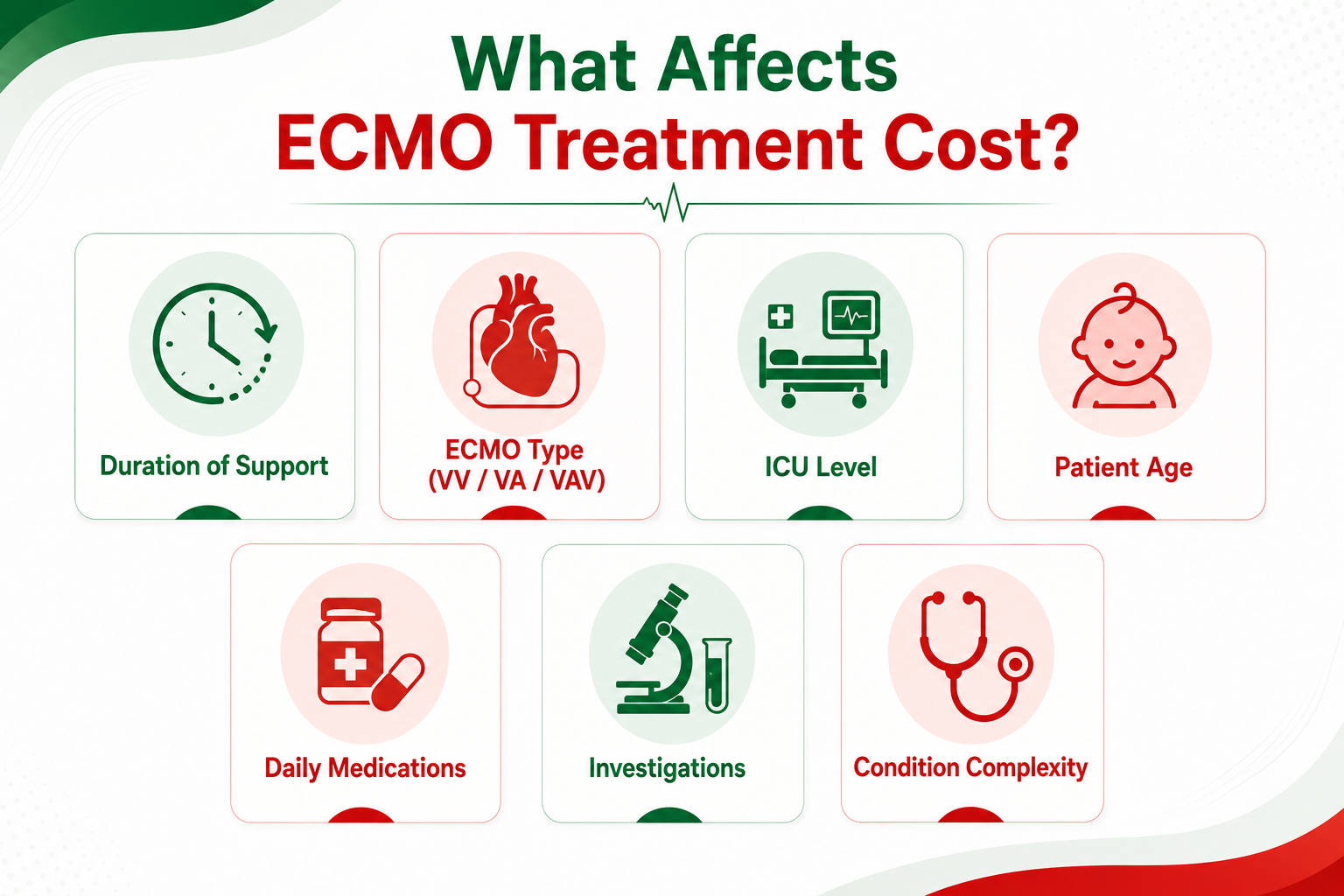
What Factors Affect the Cost of ECMO Treatment?
The total ECMO treatment cost in India depends on several clinical and logistical variables. Understanding these helps families and referring physicians plan appropriately.
ECMO Treatment Cost in India: City-Wise Comparison
ECMO is available at a limited number of specialist cardiac and critical care centres across India. Delhi NCR is one of the most developed ecosystems for ECMO in the country, offering access to experienced CTVS surgeons, dedicated cardiac ICUs, and advanced monitoring infrastructure.
| City | Indicative Total Episode Cost (INR) |
| Delhi / Delhi NCR | ₹6,00,000 – ₹12,00,000+ |
| Mumbai | ₹7,00,000 – ₹22,00,000+ |
| Chennai | ₹5,50,000 – ₹18,00,000+ |
| Bangalore | ₹6,00,000 – ₹20,00,000+ |
| Hyderabad | ₹5,50,000 – ₹18,00,000+ |
Costs are indicative and subject to variation based on hospital, ECMO type, circuit changes, and duration of support.
Why Delhi NCR for ECMO?
Delhi NCR is home to several NABH-accredited hospitals with dedicated cardiac surgical ICUs and ECMO programmes. The concentration of MCh-trained cardiothoracic surgeons, cardiac intensivists, and perfusionists makes it one of India’s strongest centres for ECMO initiation and management across neonatal, paediatric, and adult patients.
ECMO Treatment Cost in India for International Patients
For patients travelling from the UAE, UK, USA, East Africa, or elsewhere in South Asia, ECMO treatment in Delhi cost a fraction of what equivalent advanced life-support care would cost in those countries, with no reduction in the quality of critical care or surgical expertise.
| Currency | Indicative Daily ECMO Cost | Indicative Total Episode Cost |
| USD | USD 500 – 1,100 per day | USD 7,000 – 25,000 |
| GBP | GBP 390 – 870 per day | GBP 5,500 – 20,000 |
| AED | AED 1,850 – 4,000 per day | AED 26,000 – 92,000 |
Currency conversions are indicative and subject to change. Final costs are confirmed after clinical assessment.
Support available for international patients includes medical visa invitation letters, complete discharge documentation (operative notes, daily ICU records, itemised billing for insurance reimbursement), and accommodation guidance for accompanying family members.
ECMO Success Rate: What Does the Evidence Show?
ECMO success rates vary by indication, patient age, and the experience of the treating centre. For families weighing the decision, understanding what the evidence shows is important.
According to data published by the ECMO Society of India, across approximately 18 active Indian ECMO centres between 2010 and 2017, the overall survival rate was 48.55% across 620 reported ECMO runs.
Internationally, published data from ELSO (Extracorporeal Life Support Organisation) registry records, covering more than 56,000 ECMO patients across 290 centres, show survival rates of approximately 50-70% for neonatal respiratory ECMO, and 40-57% for cardiac indications
Factors that influence individual ECMO outcomes:
- Age and baseline organ function at the time of ECMO initiation
- Underlying diagnosis (respiratory ARDS generally has better outcomes than post-cardiac arrest ECMO)
- Time from deterioration to ECMO initiation (earlier is better)
- ECMO centre volume and team experience
- Whether a reversible cause can be identified and treated during ECMO support
When Is ECMO Treatment Recommended?
ECMO is not a first-line treatment. It is initiated when conventional life-support measures have been exhausted and the patient has a potentially reversible condition.
ECMO is typically recommended in the following situations:
Cardiac indications:
- Severe cardiogenic shock not responding to medications or an intra-aortic balloon pump
- Post-cardiac surgery failure to wean from cardiopulmonary bypass
- Massive heart attack with haemodynamic collapse
- Myocarditis with severe ventricular dysfunction
- Bridge to heart transplantation or ventricular assist device (VAD) implantation
- ECMO-assisted CPR (ECPR) for refractory in-hospital cardiac arrest
Respiratory indications:
- Severe ARDS (Acute Respiratory Distress Syndrome) with refractory hypoxaemia
- Severe pneumonia (including viral pneumonia) not responding to ventilator support
- Pulmonary embolism with haemodynamic collapse
- Bridge to lung transplantation in selected cases
Neonatal and paediatric indications:
- Neonatal respiratory failure (meconium aspiration syndrome, congenital diaphragmatic hernia, persistent pulmonary hypertension of the newborn)
- Post-operative cardiac failure following congenital heart surgery
- Sepsis-related cardiorespiratory failure in neonates and children
ECMO is not appropriate when the underlying condition is irreversible, when there is advanced multi-organ failure beyond recovery, or when the patient or family has made a clear decision against aggressive life support. Careful patient selection is as important as the technical conduct of ECMO itself.
For a detailed discussion about the ECMO procedure itself, visit the ECMO treatment page.
Why Choose Dr. Dinesh Kumar Mittal for ECMO in Delhi?
When a loved one requires ECMO, the choice of the best heart surgeon and hospital is not a considered decision made over days or weeks. It is often made in hours, in the middle of a crisis. The reputation, experience, and infrastructure of the treating team matter enormously.
Patients and families across Delhi NCR trust Dr. Mittal for ECMO and critical cardiac care because of:
- MCh in Cardiothoracic Surgery from AIIMS, New Delhi; India’s highest superspeciality qualification in the field
- Pioneer of Neonatal Cardiac Surgery and Aortic Intervention in North India with specific expertise in neonatal and paediatric ECMO indications
- 10,000+ successful cardiac surgeries performed, including complex cases requiring post-operative ECMO support
- Fellowship in Endovascular Stenting, Milan, Italy, adding expertise in catheter-based cardiac interventions that may precede or follow ECMO
- Full ECMO-capable critical care infrastructure at Fortis Hospital, Shalimar Bagh, a NABH-accredited facility with dedicated cardiac ICUs, ECMO circuits on standby, 24/7 perfusionist and intensivist support, and emergency cardiac surgery capability
- Transparent, honest communication with families throughout the ECMO run, including regular updates on clinical progress, realistic prognosis, and cost
Book a Consultation for ECMO Treatment in Delhi
If a patient has been referred for ECMO, or if a family member is currently in ICU and ECMO has been recommended, the next step is direct contact with a specialist.
For non-emergency enquiries, families seeking a second opinion, patients awaiting elective cardiac surgery who wish to understand ECMO as a contingency, or international patients planning travel, a consultation can be arranged to discuss the clinical picture, ECMO suitability, and expected costs.
During your consultation with Dr. Dinesh Kumar Mittal, you will receive:
- Clinical review of existing investigation reports, echocardiography, and ICU records
- Assessment of ECMO candidacy, cardiac versus respiratory ECMO indication, and circuit type
- Clear explanation of the ECMO process, expected duration, and weaning strategy
- Transparent discussion of expected outcomes and realistic prognosis based on the underlying condition
- Full cost estimate based on the type of ECMO, likely duration, and hospital infrastructure required
- Guidance on insurance coverage and pre-authorisation requirements
For international families, a remote pre-travel opinion is available, share echocardiogram reports, CT imaging, and clinical notes for an early assessment before arranging travel or transfer.
Frequently Asked Questions
Is ECMO covered by health insurance in India? expand_more
Yes. ECMO is covered by most comprehensive health insurance policies in India as a critical inpatient intervention, subject to policy terms and pre-authorisation requirements. Families are advised to notify their insurer immediately on ICU admission.
How is ECMO different from a ventilator? expand_more
A ventilator supports breathing by delivering oxygen into the lungs through a tube, but it relies on the lungs still being able to transfer that oxygen into the bloodstream. When the lungs or heart are too damaged to respond to a ventilator, ECMO takes over both functions.
How long does ECMO treatment last? expand_more
Most ECMO runs last between 5 and 21 days, though some patients require shorter or significantly longer support. The duration depends on how quickly the underlying cardiac or respiratory condition responds to treatment.
Is ECMO available for newborns and children in Delhi? expand_more
Yes. Neonatal and paediatric ECMO is available at specialist centres in Delhi. Dr. Dinesh Kumar Mittal is a recognised pioneer in neonatal cardiac surgery in North India, with specific expertise in managing neonates and children who require ECMO support following.
How do I book an appointment with Dr. Dinesh Kumar Mittal? expand_more
You can contact Dr. Dinesh Kumar Mittal's team by calling directly or by using the online appointment facility on the website. For international patients, clinical reports can be shared in advance for a remote assessment.

Dr. Dinesh Kumar Mittal's Content Team
Dr. Dinesh Kumar Mittal's medical content team specialises in creating accurate, clear, and patient-focused healthcare content. With strong clinical understanding and expertise in technical writing and SEO, the team translates complex medical information into reliable, accessible resources that support informed decisions and uphold Dr. Mittal's commitment to quality care.
This content is reviewed by Dr. Dinesh Kumar Mittal
Related Articles
Heart Attack Symptoms in Women: Why They’re Different From Men
Most people picture a heart attack the same way: a man clutching his chest, staggering,…
Read Article →
पेसमेकर क्या होता है? जानिए पेसमेकर की ज़रूरत कब पड़ती है (What is Pacemaker in Hindi)
पेसमेकर (Pacemaker), ये नाम सुनते ही ज़्यादातर लोगों के मन में एक ही सवाल कौंधता…
Read Article → WhatsApp