
Paediatric Heart Surgery in Delhi
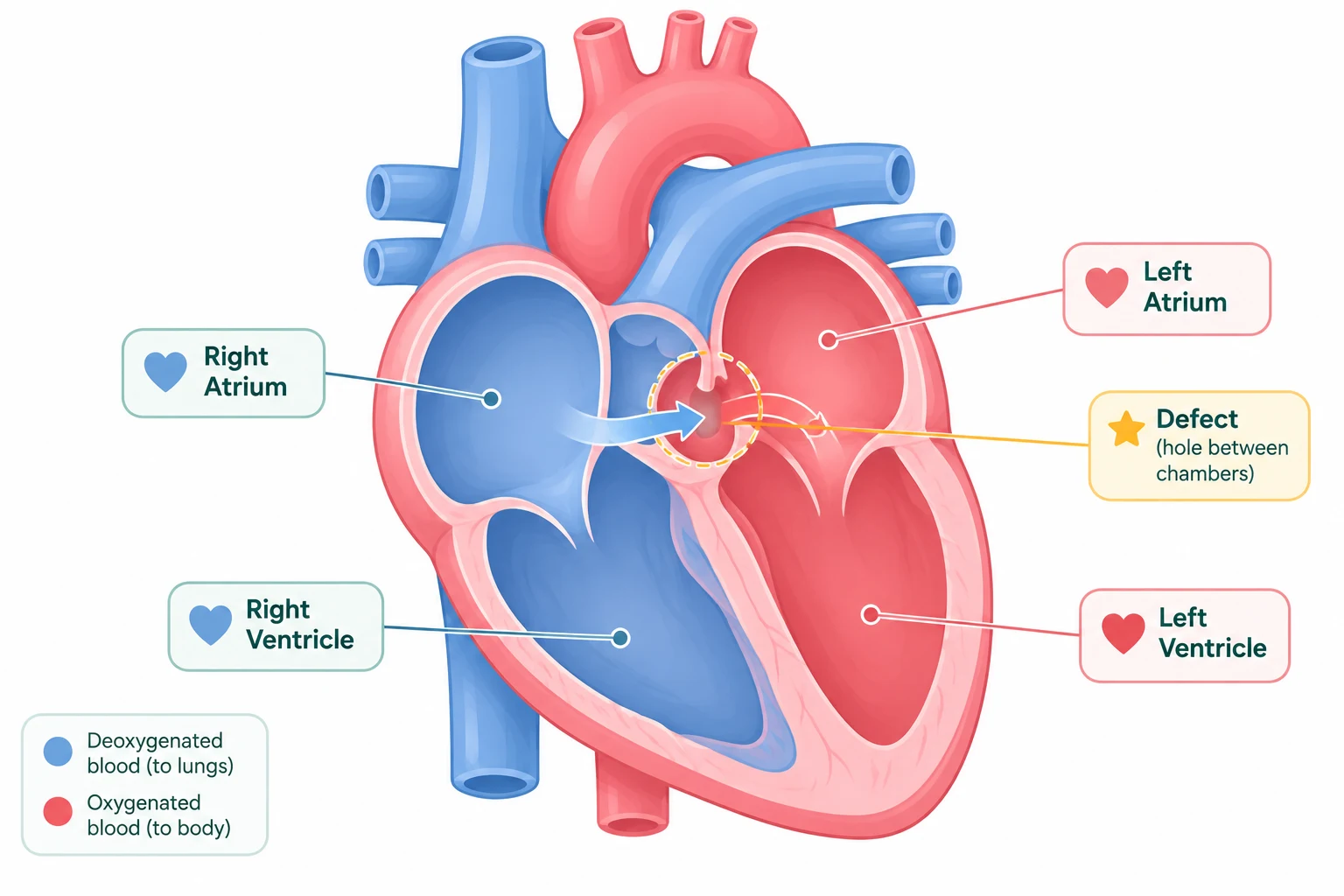
Paediatric heart surgery (also known as pediatric cardiac surgery) is the surgical treatment of structural heart problems that a child is born with, known as congenital heart defects (CHDs). These defects affect how blood flows through the heart and to the rest of the body, and in India, they are estimated to affect around 9 in every 1,000 live births, which works out to more than 200,000 babies born with a heart defect every year. About one in five of these children needs surgery or a catheter-based procedure within their first year of life.
Dr. Dinesh Kumar Mittal, Director and Head of Cardiothoracic and Vascular Surgery at Fortis Hospital, Shalimar Bagh, Delhi, is a pioneer of neonatal cardiac surgery in North India, with an MCh from AIIMS, New Delhi and over 25 years of experience treating congenital heart disease in newborns, infants, and children.
Request a Consultation
What Is Paediatric Heart Surgery?
Paediatric heart surgery is a procedure performed to repair or reconstruct a structural defect in a child’s heart, usually one that is present from birth. It can involve closing a hole between heart chambers, reconnecting misplaced blood vessels, widening narrowed valves or arteries, or rebuilding heart structures so blood flows correctly to the lungs and body.
Some defects are simple and repaired in a single operation. Others, such as complex “single ventricle” defects, are managed in a staged series of surgeries carried out over the first few years of a child’s life. Whenever possible, minimally invasive or catheter-based options are used instead of open-heart surgery, reducing recovery time for the child.
When Does a Child Need Heart Surgery?
A child needs heart surgery when a congenital heart defect is large enough, or positioned in a way, that it affects growth, oxygen levels, or long-term heart function if left untreated. Not every heart defect needs an operation; small defects are often monitored, as some close naturally.
Surgery or intervention is generally recommended when:
- The defect is large and unlikely to close on its own
- The child shows poor weight gain, breathlessness, or feeding difficulty
- Blood oxygen levels are low, causing bluish lips or skin (cyanosis)
- There is evidence of heart enlargement or strain on echocardiography
- The child has frequent chest infections linked to the heart defect
- Pulmonary hypertension is developing and is still reversible
Signs parents should not ignore: rapid breathing or sweating during feeds, poor weight gain, bluish tinge to lips or nails, tiring easily during play, or a heart murmur picked up at a routine check-up. Any of these warrant prompt evaluation by a paediatric heart specialist.
Types of Paediatric Heart Surgery
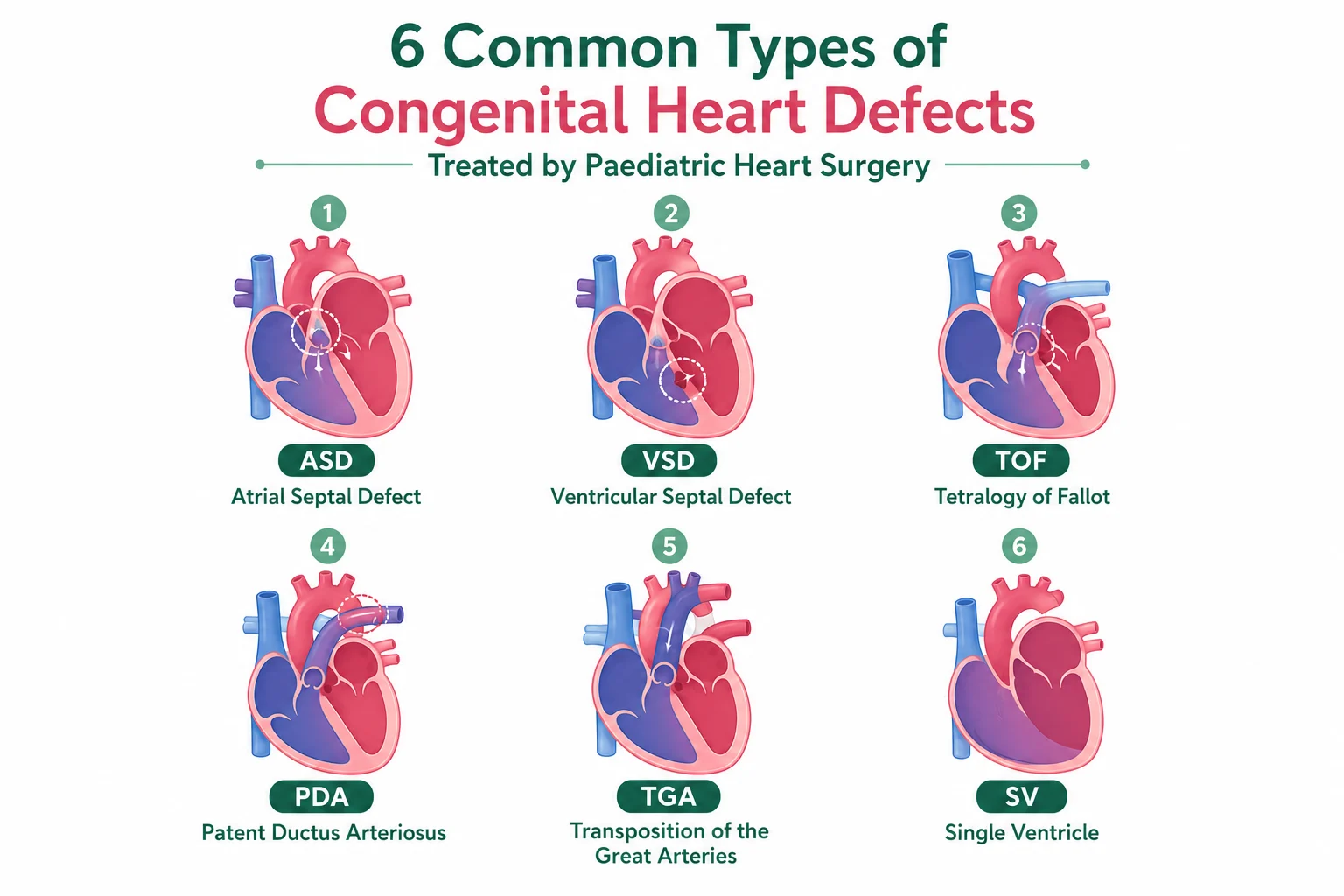
The type of paediatric heart surgery a child needs depends entirely on which structural defect they have. The most commonly treated congenital heart conditions in Delhi include:
- Atrial Septal Defect (ASD) repair: Closing a hole between the heart’s upper chambers, by open surgery or device closure
- Ventricular Septal Defect (VSD) closure: Repairing a hole between the heart’s lower pumping chambers
- Blalock-Taussig shunt: Creating a temporary pathway to improve blood flow to the lungs in cyanotic (blue baby) conditions
- Glenn procedure and Fontan procedure: Staged surgeries used in single-ventricle heart defects
- Arterial switch surgery: Correcting Transposition of the Great Arteries (TGA) in newborns
- Senning/Truncus repair: For complex outflow tract defects
- Tetralogy of Fallot (TOF) repair: Correcting the four structural abnormalities seen in this common cyanotic defect
- Paediatric pacemaker implantation: For children with abnormal heart rhythms
- ECMO support: Temporary heart-lung support for critically ill infants before or after surgery
Each of these falls under the broader umbrella of congenital cardiac surgery, and the right approach is determined by the child’s echocardiogram findings, age, and overall health.
How Is Paediatric Heart Surgery Performed?
Paediatric heart surgery is performed under general anaesthesia in a specialised paediatric cardiac operating theatre, typically using cardiopulmonary bypass to support circulation while the surgeon works on the heart. The process generally follows these stages:
- Diagnosis and planning: Echocardiography, sometimes combined with CT angiography or cardiac catheterisation, maps the exact defect.
- Pre-operative optimisation: The child’s weight, nutrition, and any infections are stabilised before surgery is scheduled.
- Anaesthesia: General anaesthesia is administered, with continuous monitoring of heart rate, oxygen levels, and blood pressure throughout.
- Surgical repair: Depending on the defect, the surgeon closes the hole, reconstructs a vessel, or performs a staged shunt procedure, often using cardiopulmonary bypass for complex repairs.
- Recovery in the paediatric cardiac ICU: The child is closely monitored as they come off ventilator support and their heart adjusts to the new blood flow pattern.
Recovery After Paediatric Heart Surgery
Recovery after paediatric heart surgery typically involves a few days in the cardiac ICU followed by a general ward stay, with most children going home within 1 to 2 weeks depending on the complexity of the defect. Catheter-based closures usually allow a much shorter stay of 2 to 3 days.
- Ventilator support is usually reduced within 24-48 hours after open-heart repair
- ICU stay: typically 2-5 days; ward stay: 4-7 days for open procedures
- Feeding is gradually reintroduced once the child is stable
- Regular echocardiogram follow-ups are scheduled at 1 week, 1 month, and periodically thereafter
- Most children return to normal growth, feeding, and activity within 4-6 weeks
Long-term follow-up with a paediatric cardiologist continues into adulthood for many congenital defects, even after a successful repair.
Risks of Paediatric Heart Surgery
Like any major surgery, paediatric heart surgery carries risks, though outcomes at experienced tertiary centres have improved substantially over the past decade, with reported neonatal cardiac surgery mortality now below 15% even for complex repairs, compared to considerably higher rates a decade ago. Risks include
- Bleeding
- Infection
- Irregular heart rhythm, and
- In newborns, a higher anaesthesia and bypass-related risk than in older children.
These risks are carefully weighed against the danger of leaving a significant defect untreated, and are minimised through experienced surgical teams, dedicated paediatric cardiac ICUs, and careful patient selection.
Paediatric Heart Surgery Cost in Delhi
The cost of paediatric heart surgery in Delhi generally ranges from ₹1,50,000 for straightforward device closures to ₹4,50,000 or more for complex open-heart repairs, depending on the defect type, surgical technique, and length of ICU stay. A detailed breakdown, including device closure versus open surgery pricing and comparisons across Indian cities, is available on our congenital heart surgery cost page and ASD surgery cost page. Most Indian health insurers cover paediatric heart surgery as an inpatient benefit, and cashless treatment may be available at Fortis Hospital, Shalimar Bagh for eligible policyholders.
Why Do Parents Choose Dr. Dinesh Kumar Mittal for Paediatric Heart Surgery in Delhi?
Parents across Delhi NCR choose Dr. Mittal because he combines rare depth of experience in newborn heart surgery with a calm, transparent approach to a highly emotional decision. His credentials include:
- MCh in Cardiothoracic Surgery from AIIMS, New Delhi
- Pioneer of Neonatal Cardiac Surgery in North India
- 10,000+ cardiac surgeries performed, spanning neonates to adults
- Fellowship in Endovascular Stenting, Milan, Italy
- Dedicated paediatric cardiac ICU, hybrid cardiac theatres, and ECMO support at Fortis Hospital, Shalimar Bagh
Book a Consultation for Paediatric Heart Surgery in Delhi
If your child has been diagnosed with a congenital heart defect, or a routine check-up has flagged a heart murmur, timely specialist evaluation makes a significant difference to long-term outcomes.
During your consultation, Dr. Dinesh Kumar Mittal will
- Review your child’s echocardiogram
- Explain whether surgery, catheter-based closure, or monitoring is appropriate, and
- Provide a clear cost and recovery timeline.
Related conditions, including Tetralogy of Fallot, VSD, PDA, and Blue Baby Syndrome, are covered in more detail on our condition pages.
Frequently Asked Questions
At what age is paediatric heart surgery usually performed? expand_more
Timing depends entirely on the defect. Critical defects, such as Transposition of the Great Arteries, are often repaired within the first days or weeks of life, while less urgent defects like an isolated ASD may be scheduled electively in early childhood.
Can congenital heart defects be treated without open surgery? expand_more
Yes, many defects, including a straightforward ASD or PDA, can be closed using a catheter-based device instead of open-heart surgery, which shortens hospital stay and recovery time considerably.
Is paediatric heart surgery safe for newborns? expand_more
Yes, when performed at a specialist centre with a dedicated neonatal cardiac ICU. Outcomes for newborn heart surgery in India have improved significantly over the past decade with advances in surgical technique and post-operative care.
Who is the best heart surgeon in Delhi? expand_more
Dr. Dinesh Kumar Mittal is one of the leading choices for ischaemic cardiomyopathy treatment in Delhi, with over 25 years of experience as a Cardiothoracic and Vascular Surgeon and 10,000+ cardiac surgeries performed.
How can I contact Dr. Dinesh Kumar Mittal for a consultation? expand_more
You can contact Dr. Dinesh Kumar Mittal by calling +91-98184 34656, messaging on WhatsApp, or booking an appointment directly through the website's online booking facility.

Dr. Dinesh Kumar Mittal's Content Team
Dr. Dinesh Kumar Mittal's medical content team specialises in creating accurate, clear, and patient-focused healthcare content. With strong clinical understanding and expertise in technical writing and SEO, the team translates complex medical information into reliable, accessible resources that support informed decisions and uphold Dr. Mittal's commitment to quality care.
This content is reviewed by Dr. Dinesh Kumar Mittal
Related Treatments

Congenital Cardiac Surgery in Delhi
Congenital Heart Disease (CHD) is a term for a range of heart defects present from birth. These defects affect the…
PDA Ligation Surgery in Delhi
Patent ductus arteriosus (PDA) is one of the most common congenital heart defects, and for babies, children, or adults where the…
Related Blogs
Can Pediatric VSD Closure Prevent Future Heart Complications? – Dr. Dinesh Mittal
Pediatric Ventricular Septal Defects (VSDs) are common heart problems in children with unusual holes…
Read Article →
Is Adult VSD Closure a Viable Solution for Heart Problems? – Dr. Dinesh Mittal
Ventricular Septal Defects (VSDs) are common heart issues in adults, involving abnormal openings between…
Read Article →
What Are the Various Treatment Options Available for VSD? – Dr. Dinesh Mittal
Ventricular Septal Defects (VSDs) are common heart problems since birth, causing a hole in…
Read Article →
Congenital Heart Procedures Cost in Delhi | Dr. Dinesh Kumar Mittal – Dr. Dinesh Mittal
Cardiac wellness plays a vital role in giving heart patients more longevity and better…
Read Article →
Preparing for Tetralogy of Fallot Repair: What to Expect?
Tetralogy of Fallot is one of the most common congenital heart defects, accounting for…
Read Article →
What Are the Available Treatments for TAPVC?
In an anatomically normal heart, oxygenated blood from the lungs drains into the left…
Read Article → WhatsApp