
Aortic Dissection Treatment in Delhi
Aortic dissection is a medical emergency in which a tear develops in the inner wall of the aorta, the body’s main artery. Blood surges through this tear, splitting the layers of the artery wall apart. Without immediate Aortic Dissection Treatment, the risk to life rises with every passing hour, which is why choosing the best acute aortic dissection hospital in Delhi and the best aortic dissection treatment in Delhi can be the single most important decision a family makes.
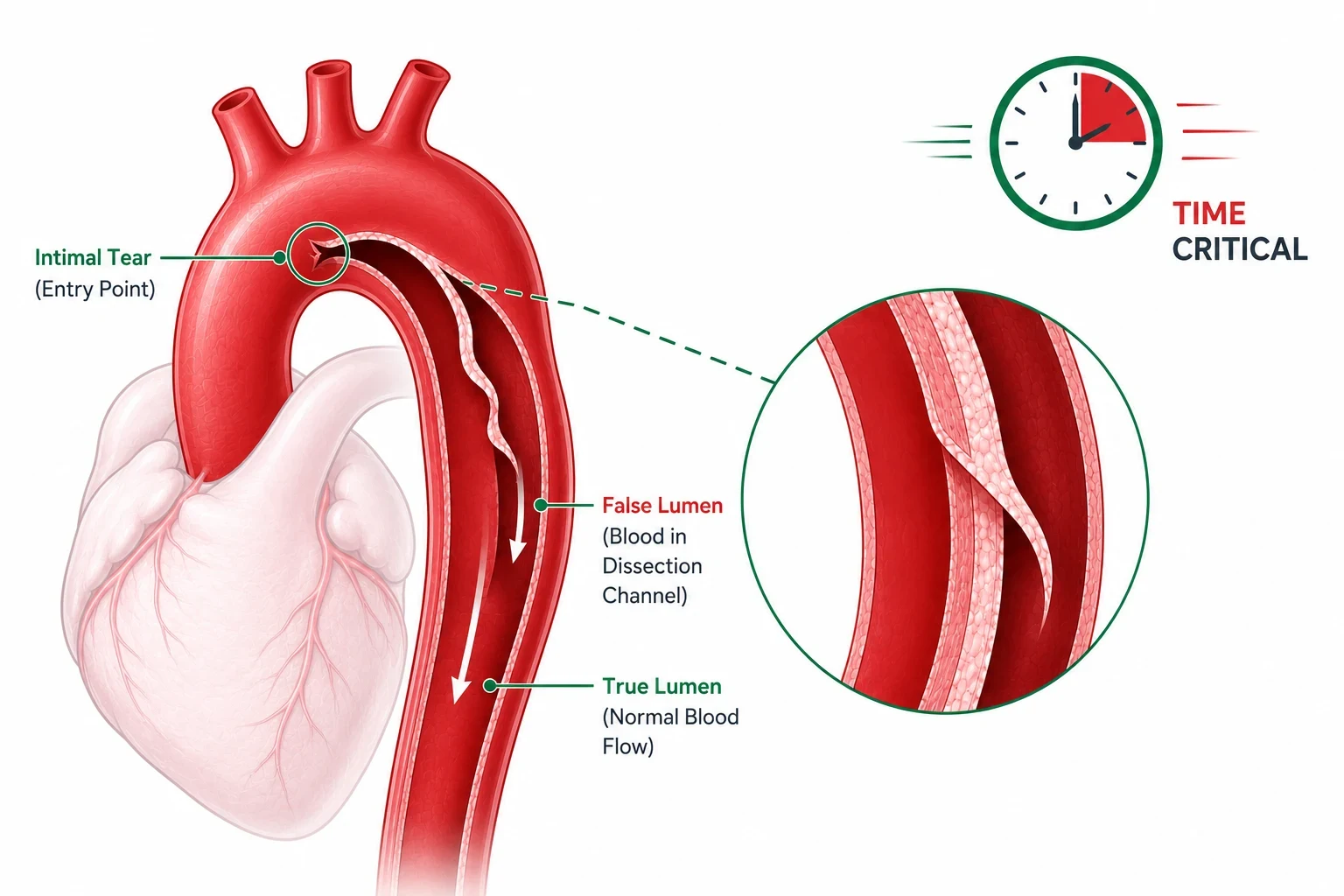
Dr. Dinesh Kumar Mittal, Senior Cardiac and CTVS Surgeon at Fortis Hospital, Shalimar Bagh, Delhi, leads the emergency management of acute aortic dissection with over 25 years of experience in complex aortic and cardiovascular surgery, backed by round-the-clock cardiac ICU and hybrid operating theatre support.
Request a Consultation
What Is Aortic Dissection?
Aortic dissection occurs when a tear forms in the inner lining of the aorta, allowing blood to flow between the layers of the artery wall and force them apart. This creates a “false lumen” alongside the normal blood channel, weakening the aortic wall and risking rupture.
The condition is classified using the Stanford system:
- Type A – involves the ascending aorta (near the heart) and is a surgical emergency
- Type B – involves the descending aorta only and may be managed medically or with a stent-graft
Globally, acute aortic dissection affects an estimated 3 to 16 people per 100,000 each year, and untreated Type A dissection carries a mortality rate that rises by roughly 1 to 2% for every hour without treatment. This is precisely why rapid access to the best acute aortic dissection hospital in Delhi matters more than almost any other factor in survival.
Aortic Dissection Symptoms: What Should You Never Ignore?
The hallmark symptom of aortic dissection is sudden, severe chest or back pain, often described as tearing or ripping, and frequently migrating as the tear extends along the aorta.
Other warning signs include:
- Sudden, severe pain between the shoulder blades
- Shortness of breath or fainting
- Weakness or numbness on one side of the body
- A noticeable difference in pulse or blood pressure between the two arms
- Sweating, nausea, or a sense of impending doom
Anyone experiencing sudden tearing chest pain should call emergency services immediately and be taken to a centre equipped for aortic dissection treatment in Delhi without delay, rather than waiting to “see if it passes.”
Why Every Minute Counts in Acute Aortic Dissection
Acute aortic dissection is one of the few true cardiovascular emergencies where treatment delay directly costs lives. Type A dissection left untreated has a mortality of around 1-2% per hour in the first 24-48 hours, and studies from the International Registry of Acute Aortic Dissection (IRAD) report that surgical repair significantly improves survival compared with medical management alone.
This is the core reason patients and referring doctors across Delhi NCR look specifically for the best acute aortic dissection hospital in Delhi rather than the nearest general facility; outcomes depend on 24/7 availability of a cardiac surgical team, an on-call CT angiography suite, and an immediately deployable cardiac operating theatre.
Type A aortic dissection vs Type B aortic dissection: How Does Classification Guide Treatment?
The Stanford classification directly determines the treatment pathway, which is why accurate imaging within the first hour of arrival is critical.
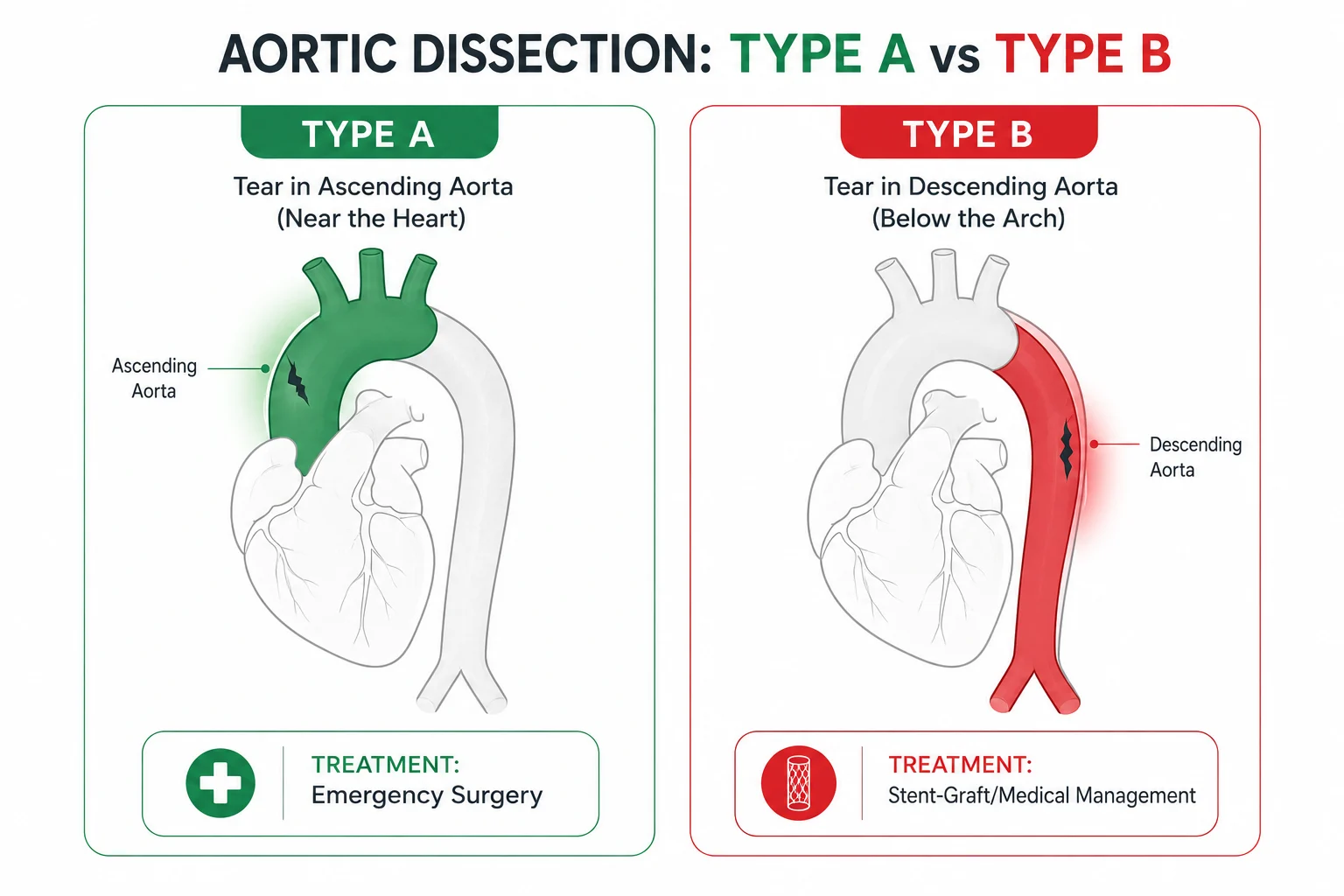
- Type A dissection almost always requires emergency open-heart surgery, since the tear sits close to the heart and carries a high risk of rupture into the pericardium or aortic valve involvement.
- Type B dissection without complications may be managed with blood pressure control and medication, while complicated cases are treated with a minimally invasive stent-graft procedure (TEVAR – Thoracic Endovascular Aortic Repair).
Aortic Dissection Diagnosis
Aortic dissection is diagnosed using urgent imaging, most commonly a CT angiogram, which can confirm the tear, its extent, and involvement of major branch arteries within minutes.
Diagnostic tools used include:
- CT Angiography: The gold standard for rapid, detailed diagnosis
- Transoesophageal Echocardiography (TEE): Used in unstable patients, often in the operating theatre
- MR Angiography: Used in stable patients when radiation exposure is a concern
- Chest X-ray and ECG: Initial screening tools, though not definitive alone
Speed of diagnosis is as important as accuracy, which is another reason the best acute aortic dissection hospital in Delhi will have imaging and a surgical team available around the clock, not on a scheduled basis.
Aortic Dissection Treatment Options in Delhi
Treatment is tailored strictly to the type, extent, and stability of the dissection.
- Emergency Open Aortic Surgery – for Type A dissection, the damaged section of the aorta is repaired or replaced with a graft, sometimes alongside aortic valve or root repair (see our Bentall procedure and aortic and mitral valve replacement pages)
- TEVAR (Stent-Graft Placement) – a minimally invasive option for suitable Type B dissections, related to the techniques used in aneurysm repair surgery
- Medical Management – strict blood pressure and heart rate control for uncomplicated Type B cases
- ECMO Support – used in critically unstable patients before or during surgery (see ECMO in Delhi)
Every treatment decision is made after correlating imaging findings with the patient’s overall cardiovascular health, including any underlying coronary artery disease or aneurysmal changes elsewhere in the aorta, such as aortic aneurysm.
Aortic Dissection Recovery and Long-Term Care
Recovery after aortic dissection treatment depends heavily on the type of repair performed and how quickly treatment was started.
- After open surgery: ICU monitoring for several days, hospital stay of 7-10 days, and gradual return to routine activity over 6-8 weeks
- After TEVAR: Shorter hospital stay of 3-5 days with faster recovery
- Lifelong follow-up: Regular CT or MR imaging is required for life to monitor the repaired aorta and detect any new aneurysmal change early
- Blood pressure control remains the single most important factor in preventing further dissection or aneurysm formation
Why Choose Dr. Dinesh Kumar Mittal for Acute Aortic Dissection Treatment in Delhi?
Patients and families search specifically for the best acute aortic dissection hospital in Delhi because generic emergency care is not enough for this condition; it demands an experienced aortic surgeon available immediately, not after a transfer delay.
Dr. Mittal’s practice at Fortis Hospital, Shalimar Bagh offers:
- 25+ years of cardiothoracic and vascular surgical experience, including complex aortic repair
- MCh (AIIMS, New Delhi), India’s highest post-graduate qualification in cardiothoracic surgery
- On-site 24/7 cardiac ICU, ECMO support, and hybrid cardiac operating theatres
- Expertise in both open aortic surgery and endovascular (TEVAR) techniques
- A track record across 10,000+ cardiac and vascular procedures
Book a Consultation for Aortic Dissection Treatment in Delhi
If you or a family member has sudden, severe chest or back pain, do not wait for a scheduled appointment, proceed directly to emergency care.
For known aortic conditions, follow-up aneurysms, or a second opinion after a dissection diagnosis, Dr. Dinesh Kumar Mittal provides a full evaluation, including review of CT angiography, discussion of surgical versus endovascular options, and a clear recovery plan.
Learn more about related procedures such as open heart surgery in Delhi and minimally invasive cardiac surgery.
Frequently Asked Questions
Which hospital is best for acute aortic dissection in Delhi? expand_more
The best acute aortic dissection hospital in Delhi is one with round-the-clock cardiac surgical cover, on-site CT angiography, and a dedicated cardiac ICU. Dr. Dinesh Kumar Mittal's team at Fortis Hospital, Shalimar Bagh offers this combination for emergency aortic dissection care.
What is the survival rate of aortic dissection? expand_more
Survival depends heavily on the speed of treatment. Untreated Type A dissection carries very high early mortality, while surgical repair at an experienced centre significantly improves survival, particularly when performed within the first hours of symptom onset.
Who is the best cardiac surgeon in Delhi? expand_more
Dr. Dinesh Kumar Mittal is among Delhi's most experienced cardiac surgeons, with over 25 years of experience, an MCh in Cardiothoracic Surgery from AIIMS New Delhi, and 10,000+ cardiac and vascular procedures performed, including complex aortic and congenital heart surgery.
Who is the best CTVS surgeon in Delhi? expand_more
As Director and Head of Cardiothoracic and Vascular Surgery at Fortis Hospital, Shalimar Bagh, Dr. Dinesh Kumar Mittal is widely regarded as one of the leading CTVS surgeons in Delhi, with specialist expertise spanning open aortic surgery, endovascular stenting, and congenital cardiac repair.
How do I book a consultation with Dr. Dinesh Kumar Mittal? expand_more
You can contact Fortis Hospital, Shalimar Bagh directly or use the online appointment facility for a consultation regarding aortic dissection, aneurysm, or related aortic conditions.

Dr. Dinesh Mittal's Medical Content Team
Dr. Dinesh Kumar Mittal’s medical content team creates clear, reliable, and patient-friendly healthcare information. With a strong understanding of medical concepts and experience in health writing and SEO, the team simplifies complex topics into easy-to-read content. Each resource is designed to help patients better understand their care options and make informed decisions, while aligning with Dr. Mittal’s commitment to quality and transparency in patient care.
This content is reviewed by Dr. Dinesh Kumar Mittal
Related Blogs
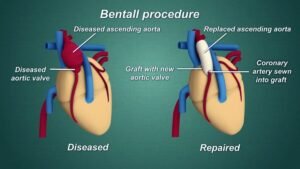
What is Bentall Surgery, and How Does it Address Heart Conditions? – Dr. Dinesh Mittal
Bentall Surgery is a critical procedure for treating severe heart issues related to the…
Read Article →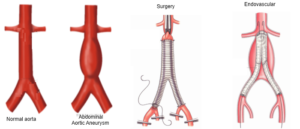
How Does Aortic Intervention Help Treat Aortic Aneurysms? – Dr. Dinesh Mittal
Our body has many blood vessels; one important one is called the aorta. It…
Read Article →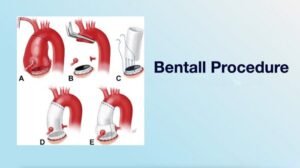
Who is the Right Candidate for the Bentall Procedure?
The Bentall Procedure is a surgical intervention used to address a bulging aorta. It…
Read Article → WhatsApp