
Mechanical vs Tissue Valve: Which Is Right for You?
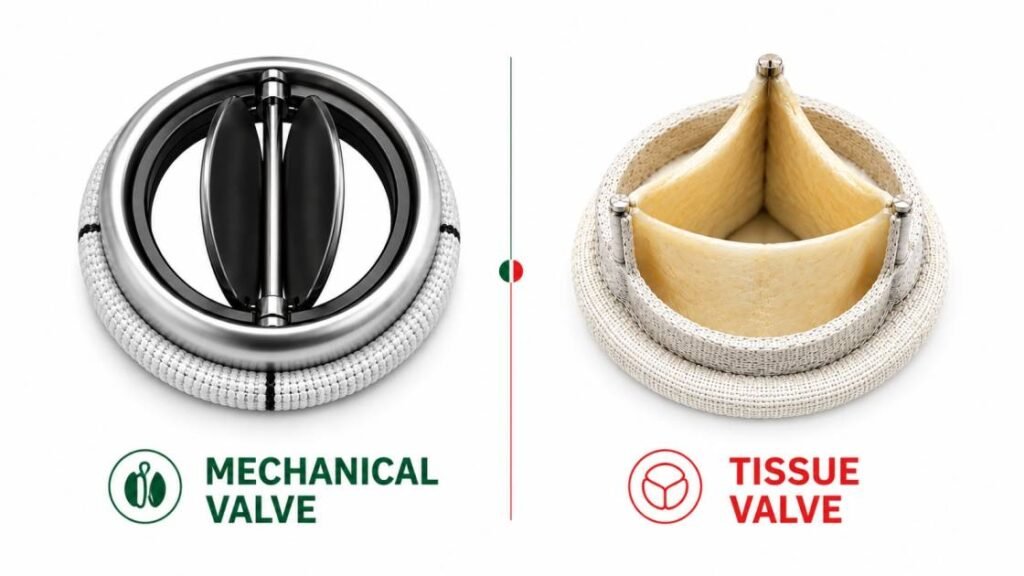
Being told that you need a heart valve replacement often raises one question before any other:
“Which valve should I choose?”
For many patients, the decision comes down to two options: a mechanical heart valve or a tissue (bioprosthetic) heart valve. Both are designed to restore healthy blood flow and improve quality of life, but they differ significantly in durability, lifestyle implications, and long-term care.
There is no universal “best” valve. The right choice depends on your age, medical history, lifestyle, future pregnancy plans, and your willingness to take long-term medication.
Understanding the advantages and limitations of each option can help you make a confident, informed decision alongside your cardiac surgeon.
Request a Consultation
Why Do Heart Valves Need to Be Replaced?
The heart has four valves that ensure blood flows in the correct direction. When one of these valves becomes severely narrowed (stenosis) or leaky (regurgitation), the heart has to work much harder to pump blood.
Valve replacement is recommended when damage becomes severe enough to cause symptoms or threaten heart function.
Without treatment, advanced valve disease can eventually lead to heart failure, stroke, rhythm disorders, or sudden cardiac complications.
What Is a Mechanical Heart Valve?
A mechanical valve is an artificial valve made from highly durable materials such as titanium, pyrolytic carbon, and polyester.
These valves are designed to mimic the function of a natural heart valve while lasting for several decades.
Due to their exceptional durability, mechanical valves are often recommended for younger patients who are expected to live many years after surgery.
However, their biggest drawback is that they increase the risk of blood clot formation. Patients therefore require lifelong anticoagulant (blood thinner) therapy, usually with warfarin.
Dr Dinesh Kumar Mittal explains, “Mechanical valves are incredibly durable and can last a lifetime, but they require a lifelong commitment to anticoagulation and regular monitoring. Choosing one is as much about lifestyle as it is about longevity.”
What Is a Tissue Heart Valve?
A tissue valve, also called a bioprosthetic valve, is made from animal tissue, usually from a pig (porcine valve) or cow (bovine valve). Some tissue valves may also be created using donated human heart valves.
These valves closely resemble the function of a natural valve and generally do not require lifelong blood thinner medication.
The trade-off is durability. Over time, tissue valves naturally wear out and may eventually need replacement.
Modern tissue valves have become significantly more durable than earlier generations and are increasingly preferred in older adults.
Mechanical vs Tissue Valve: What’s the Difference?
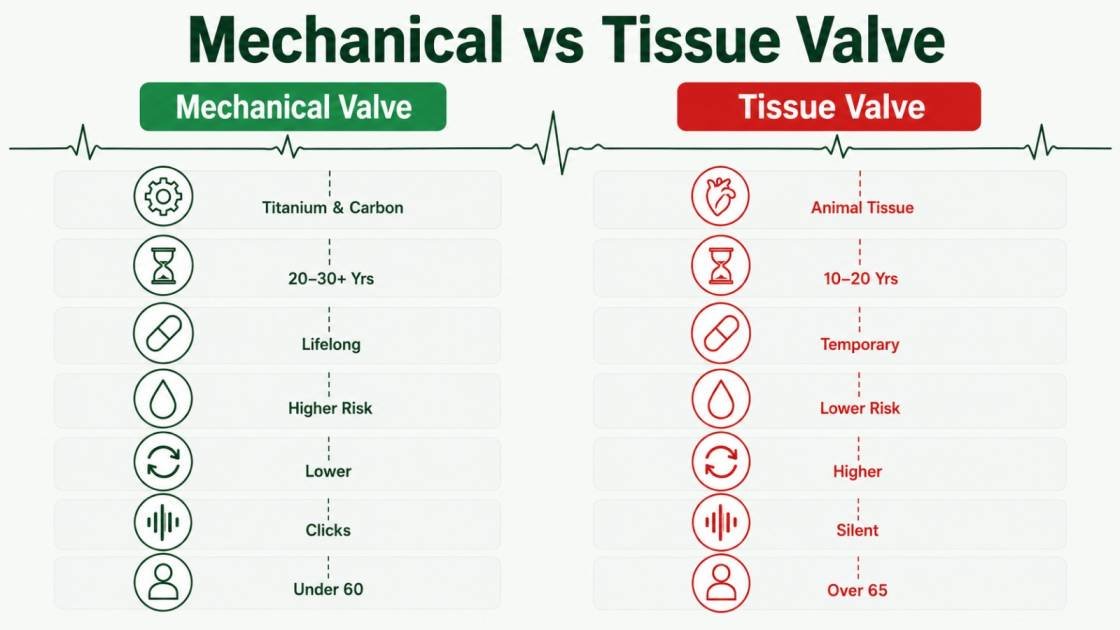
Mechanical and tissue valves are the two main types of artificial heart valves used to replace a damaged heart valve. Mechanical valves are made from durable materials such as carbon or metal and are designed to last for decades, but they require lifelong blood-thinning medication.
Tissue valves are made from animal or donated human tissue and generally do not require long-term anticoagulation, although they may wear out over time and eventually need replacement. The right choice depends on factors such as your age, lifestyle, overall health, and personal preferences, making it an important decision to discuss with your cardiac surgeon.
Which Valve Lasts Longer?
Mechanical valves generally offer lifelong durability, whereas tissue valves have a finite lifespan and may eventually need replacement. However, longevity is only one part of the decision.
As Dr Dinesh Kumar Mittal puts it, “Mechanical valves are built to last for decades and often serve patients for life. Tissue valves, while highly effective, gradually wear out over time. The choice isn’t simply about which valve lasts longer, it’s about selecting the one that best fits a patient’s age, lifestyle, and long-term health goals.”
Blood Thinners: Why Do They Matter?
This is often the deciding factor for many patients.
Mechanical valves require lifelong anticoagulation to prevent blood clots from forming on the artificial surface.
This means:
- Regular INR blood tests
- Careful medication adjustments
- Greater awareness of bleeding risks
- Precautions before surgeries or dental procedures
Certain foods and medications may also affect blood thinner levels.
Patients with tissue valves usually require blood thinners only for the first few months after surgery unless another condition, such as atrial fibrillation, makes long-term anticoagulation necessary.
For many patients who wish to avoid regular blood monitoring, this becomes a major advantage of tissue valves.
Lifestyle Considerations
Your daily life should influence your decision just as much as medical factors.
Mechanical valves may be ideal if you:
- Are younger than 60 years
- Are comfortable taking lifelong medication
- Want to minimise the chance of future valve replacement
- Already requires blood thinners for another medical condition
A tissue valve may be more suitable if you:
- Prefer avoiding lifelong anticoagulants
- Participate in activities with a higher bleeding risk
- Are planning pregnancy
- Are older and less likely to outlive the valve
Lifestyle often matters just as much as life expectancy when selecting the right prosthetic valve.
Mechanical vs Tissue Valve: Does Age Influence the Choice?
While mechanical valves are generally recommended for younger patients because of their long-term durability, tissue valves are often preferred for patients over 65 as they usually last long enough without requiring lifelong blood thinner medication. For those between 50 and 65 years of age, the decision is far more individualised.
One patient in his early fifties visited Dr Dinesh Kumar Mittal, convinced that a mechanical valve was the obvious choice because it could last a lifetime. During the consultation, they discussed not only his age but also his active lifestyle, frequent international travel, and concerns about lifelong anticoagulation and regular INR monitoring. After carefully considering all these factors, he chose a tissue valve.
Reflecting on the experience, he said, “I walked in thinking there was one right answer based on my age. Dr Mittal helped me understand that choosing a heart valve isn’t just about how long it lasts; it’s about finding the option that best fits your health, lifestyle, and future plans.”
Discuss Your Valve Replacement Options with Dr Dinesh Kumar Mittal
Choosing between a mechanical and tissue heart valve is a decision that will affect your health for years to come. Dr Dinesh Kumar Mittal, Director and Head of Cardiothoracic and Vascular Surgery at Fortis Hospital, Shalimar Bagh, Delhi, provides personalised guidance based on your age, lifestyle, medical condition, and long-term goals.
Whether you have recently been diagnosed with valve disease or are preparing for surgery, an informed discussion can help you choose the valve that’s right for you.

 WhatsApp