
Ventricular Septal Defect (VSD) Repair Surgery in Delhi
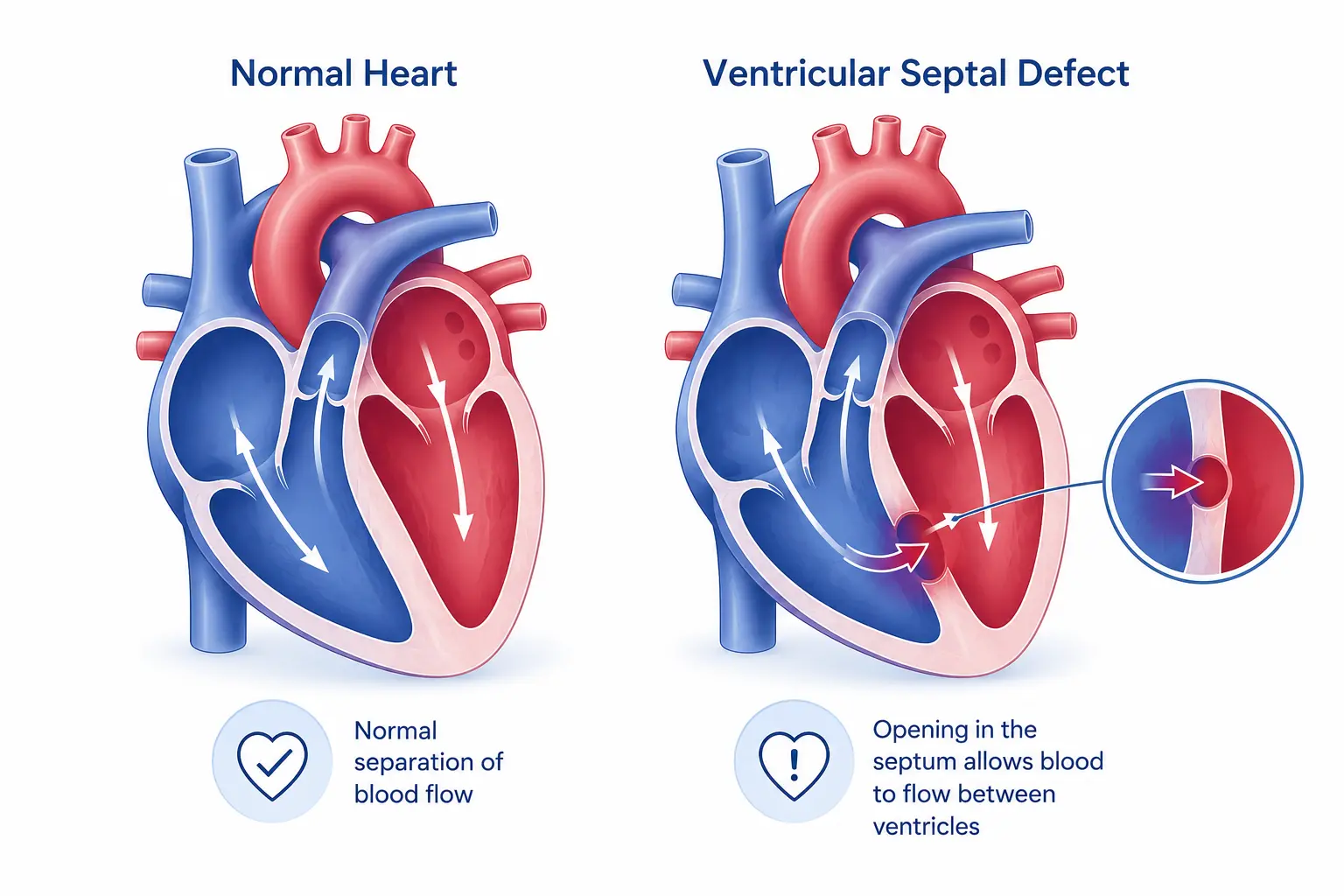
If you are looking for Ventricular Septal Defect (VSD) repair surgery in Delhi, timely treatment by an experienced cardiac surgeon is essential for achieving the best possible outcomes. A ventricular septal defect (VSD) is a hole in the wall separating the two lower chambers of the heart. It is the most common congenital heart defect diagnosed at birth, making up close to a fifth of all complex congenital heart conditions seen in children and adults (American Heart Association, 2021). Many small VSDs close on their own in infancy, but larger or persistent defects usually require timely, specialist-led VSD repair surgery to prevent long-term strain on the heart and lungs.
Dr. Dinesh Kumar Mittal, Senior Cardiac and CTVS Surgeon at Fortis Hospital, Shalimar Bagh, Delhi, has performed VSD repair in neonates, children, and adults for over 25 years, combining precise surgical technique with a personalised approach to each patient’s anatomy and overall heart health.
Request a Consultation
What Is VSD Repair Surgery?
VSD repair surgery closes the abnormal opening between the heart’s ventricles, either through open-heart surgical patch closure or, in suitable cases, a catheter-based device closure, restoring normal blood flow and easing the workload on the heart.
In open surgical repair, the surgeon accesses the heart through the chest, places the heart on a cardiopulmonary bypass machine, and closes the defect using a patch made of the patient’s own tissue (pericardium) or a synthetic material, or by direct stitching for smaller defects. In device closure, a catheter carrying a small closure device is guided through a blood vessel to the heart, avoiding open-chest surgery altogether. The right approach depends on the defect’s size, location, and type.
Procedure duration is approximately:
- Surgical repair: 2-4 hours
- Device closure: 1-2 hours
- Anaesthesia: General
When Is VSD Repair Surgery Recommended?
VSD repair is generally recommended when the defect is large, causing symptoms, or leading to enlargement of the heart chambers, since untreated large VSDs can lead to heart failure or irreversible lung damage over time.
Closure is typically advised when:
- The defect is moderate to large and unlikely to close on its own
- Echocardiography shows enlargement of the left side of the heart from excess blood flow
- The child has poor weight gain, breathlessness, or recurrent chest infections
- Pulmonary hypertension is present but still reversible
- An adult VSD is causing symptoms such as fatigue, palpitations, or reduced exercise tolerance
Small, isolated VSDs, particularly muscular defects, close spontaneously in a large proportion of infants. A Copenhagen newborn screening study found that almost nine in ten VSDs detected at birth had closed spontaneously by one year of age (Copenhagen Baby Heart Study, 2024). This is why paediatric cardiologists often monitor small defects with regular echocardiograms rather than recommending immediate surgery.
Symptoms That May Indicate a Significant VSD
Recognising the signs and VSD symptoms early allows timely evaluation before complications develop.
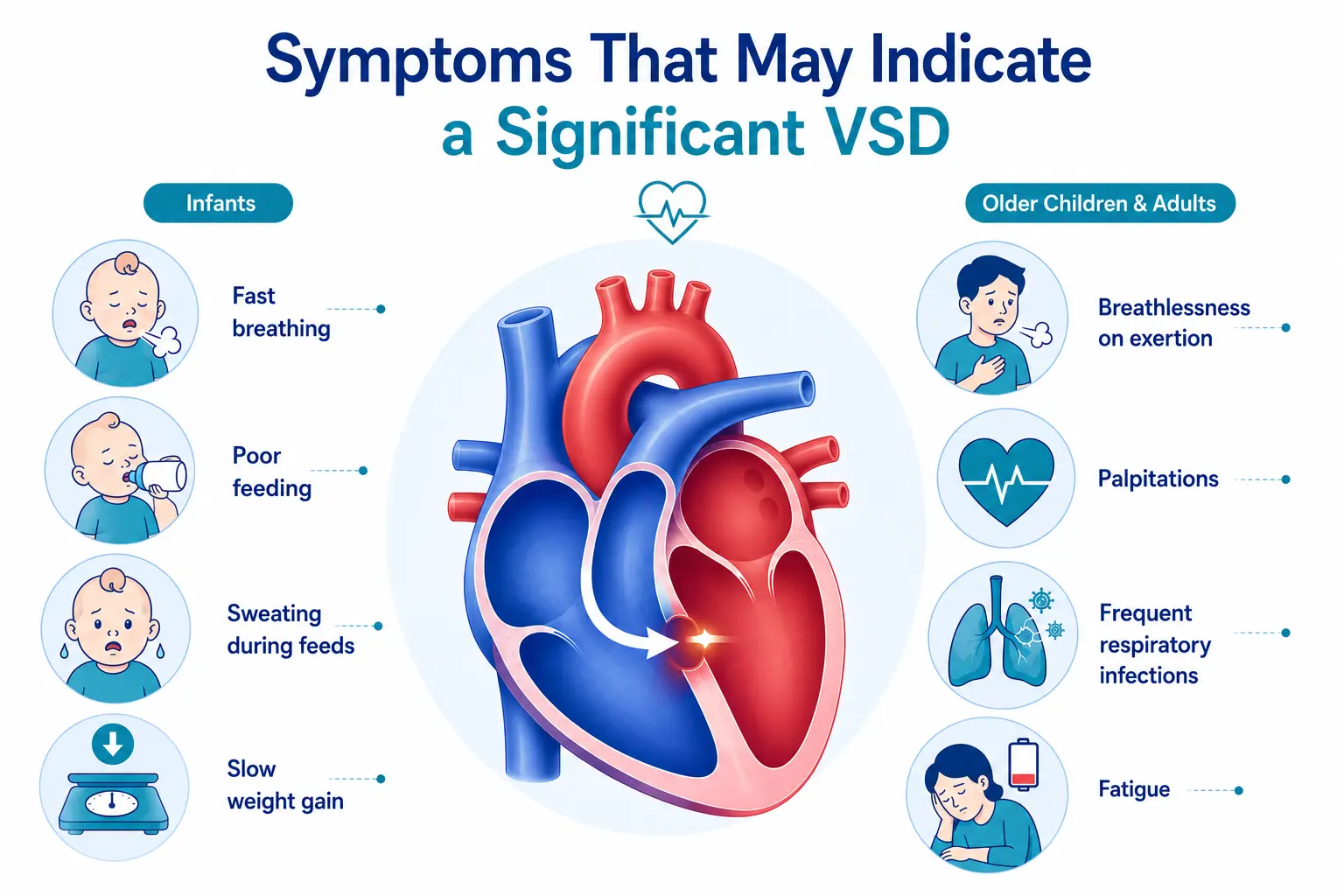
Any of these warrant a cardiac evaluation, especially if a heart murmur has already been detected.
VSD Surgical Repair vs. Device Closure: What Is the Difference?
VSD surgical repair and device closure are two different treatment approaches. Surgical repair is the standard treatment for large, complex, or valve-adjacent ventricular septal defects, while device closure is a minimally invasive option suitable only for carefully selected muscular VSDs. The comparison below highlights the key differences between these procedures.
| Feature | Surgical Repair | Device Closure |
| Type | Open-heart surgery | Catheter-based |
| Incision | Chest incision required | No chest incision |
| Best suited for | Large, multiple, or complex VSDs | Selected muscular VSDs |
| Hospital stay | 6-8 days | 2-3 days |
| Anaesthesia | General | General/sedation |
Not every VSD is suitable for device closure. Perimembranous VSDs near heart valves, and defects associated with other cardiac abnormalities, generally require surgical repair for a safe and durable result.
VSD Repair Surgery in Delhi: Step by Step Procedure
The VSD repair surgery procedure follows a structured sequence to ensure the defect is closed accurately and safely, with the heart’s function carefully protected throughout.
- Pre-operative assessment: Echocardiography, chest X-ray, ECG, and blood tests confirm the defect’s size, location, and its effect on heart function, alongside a check for pulmonary pressure.
- Anaesthesia: The procedure is carried out under general anaesthesia.
- Establishing bypass: For open repair, the heart is connected to a cardiopulmonary bypass (heart-lung) machine, which takes over the pumping and oxygenation function during surgery.
- Closing the defect: The surgeon accesses the VSD, usually through the right atrium, and closes it with a patch or direct sutures, restoring the normal wall between the ventricles.
- Weaning off bypass: Once closure is confirmed with an on-table echocardiogram, the heart is gradually restarted and weaned off the bypass machine.
- Closure and recovery: The chest is closed, and the patient is moved to the cardiac ICU for close monitoring.
After successful VSD repair surgery, blood flows normally between the heart chambers, reducing strain on the heart and lungs while supporting healthy long-term cardiac function.
Recovery After VSD Repair Surgery
VSD Repair Surgery recovery timelines vary by age and procedure type, but most patients see steady improvement within the first few weeks. After open surgical repair, ICU monitoring typically lasts 1-2 days, followed by 4-6 days on the ward. Most children return to normal activity within 4-6 weeks, while adults may need a similar or slightly longer recovery period. Device closure patients usually go home within 2-3 days and resume light activity within a week.
Post-procedure care includes:
- Regular follow-up echocardiograms for 1-2 years
- Antiplatelet medication for a defined period after device closure
- Monitoring for growth, activity tolerance, and any residual shunt
- Vaccination and infective endocarditis precautions where advised
Risks of VSD Repair Surgery
VSD repair surgery is generally safe when performed by an experienced congenital cardiac surgery team, but like any heart procedure, it may carry some risks:
- Bleeding during or after surgery.
- Infection at the surgical site or within the chest.
- Heart rhythm disturbances (arrhythmias), which are usually temporary.
- Small residual leak around the patch used to close the defect.
- Pacemaker requirement (rare) if the heart’s electrical conduction pathway is affected during repair.
- Temporary pacing support may be needed in some patients during recovery.
Long-term outcomes after VSD repair are generally excellent, especially when the defect is closed before pulmonary hypertension becomes irreversible.
VSD Repair Surgery Cost in Delhi
Ventricular septal defect repair surgery cost in Delhi starts from ₹1,50,000 and varies depending on whether the defect is closed surgically or via a catheter-based device, and the complexity of the case.
Costs vary based on:
- Type of closure (surgical patch vs. device)
- Patient’s age and associated conditions
- ICU and hospital stay duration
- Pre-operative investigations and post-operative care
Most health insurance policies in India cover VSD repair as an inpatient procedure. Patients are advised to confirm cashless eligibility and obtain a personalised cost estimate before proceeding. For a detailed breakdown, see our guide to open-heart surgery cost in Delhi.
Why Patients Trust Dr. Dinesh Kumar Mittal for VSD Repair Surgery in Delhi?
Families looking for ventricular septal repair surgery in Delhi trust Dr. Dinesh Kumar Mittal for his expertise in treating congenital heart defects across all age groups.
Why choose Dr. Mittal?
- 25+ years of experience in cardiothoracic and vascular surgery.
- MCh in Cardiothoracic Surgery from AIIMS, New Delhi.
- Extensive experience performing VSD repair in neonates, children, and adults.
- Senior Cardiac & CTVS Surgeon at Fortis Hospital, Shalimar Bagh, Delhi.
- Access to a dedicated paediatric cardiac ICU, advanced cardiac imaging, and comprehensive perioperative care.
- Evidence-based treatment plans tailored to each patient’s heart anatomy and overall health.
- Transparent guidance on treatment options, expected outcomes, recovery, and costs.
Book a Consultation for VSD Repair Surgery in Delhi
Early evaluation is essential to determine whether a ventricular septal defect can be monitored or requires device closure or VSD repair surgery before complications such as pulmonary hypertension or heart enlargement develop.
During your consultation, Dr. Dinesh Kumar Mittal will:
- Review your echocardiography and other diagnostic reports.
- Assess the size, location, and severity of the VSD.
- Evaluate its impact on heart and lung function.
- Explain the most appropriate treatment option in clear, easy-to-understand language.
- Discuss the expected recovery, possible risks, and treatment costs to help you make an informed decision.
For more information about the condition, visit our VSD Treatment page.
Frequently Asked Questions
Can a VSD close without surgery? expand_more
Yes. Many small VSDs, especially muscular ones, close spontaneously in infancy. Regular echocardiogram monitoring is used to track this before any intervention is considered.
Is VSD repair surgery safe for infants? expand_more
Yes. VSD repair is routinely and safely performed in infants at specialist congenital cardiac centres, and earlier closure generally leads to better long-term outcomes when the defect is significant.
How long does recovery take after VSD surgery? expand_more
Most children resume normal activity within 4-6 weeks after open surgical repair, while device closure patients recover faster, typically within a week.
Is VSD repair covered by health insurance in India? expand_more
Yes, most health insurance policies in India cover VSD repair surgery as an inpatient cardiac procedure, subject to policy terms.
How do I book a consultation with Dr. Dinesh Kumar Mittal? expand_more
You can book an appointment with Dr. Dinesh Kumar Mittal by contacting via the number on the website directly or using the online appointment booking facility.

Dr. Dinesh Kumar Mittal's Content Team
Dr. Dinesh Kumar Mittal's medical content team specialises in creating accurate, clear, and patient-focused healthcare content. With strong clinical understanding and expertise in technical writing and SEO, the team translates complex medical information into reliable, accessible resources that support informed decisions and uphold Dr. Mittal's commitment to quality care.
This content is reviewed by Dr. Dinesh Kumar Mittal
 WhatsApp