
Pulmonary Embolism Treatment in Delhi
Pulmonary embolism treatment in Delhi must be swift, because pulmonary embolism (PE) is a medical emergency in which a blood clot blocks one or more arteries in the lungs, cutting off oxygen supply and placing sudden strain on the heart.
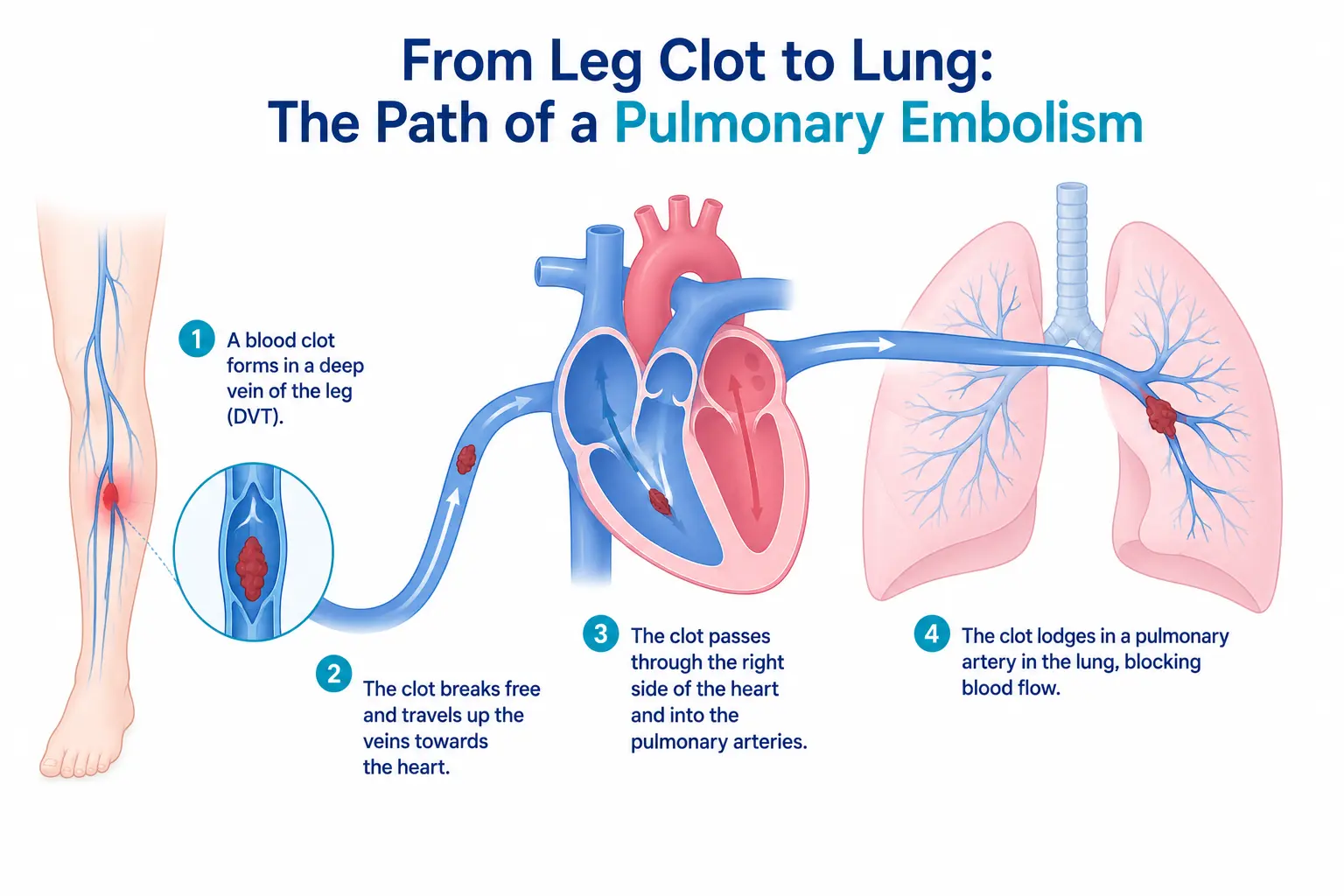
Most clots originate in the deep veins of the leg (deep vein thrombosis) and travel upward into the lungs. Without timely pulmonary embolism treatment, the condition can be fatal within hours; with prompt diagnosis and guideline-based care, most patients recover fully.
Dr. Dinesh Kumar Mittal, Director and Head of Cardiothoracic and Vascular Surgery at Fortis Hospital, Shalimar Bagh, provides round-the-clock pulmonary embolism treatment in Delhi, combining rapid risk stratification, anticoagulation, catheter-based clot removal, and surgical embolectomy for the most critical cases.
Request a Consultation
What Is Pulmonary Embolism?
Pulmonary embolism is a blockage of the pulmonary artery or its branches, almost always caused by a blood clot that has travelled from the deep veins of the legs or pelvis. The blockage raises pressure inside the right side of the heart and reduces the amount of oxygen reaching the bloodstream, which is why acute pulmonary embolism treatment is considered a time-critical emergency, similar to a heart attack or stroke.
Pulmonary Embolism Symptoms: Warning Signs
Pulmonary embolism symptoms depend on clot size and location, and can appear suddenly or build over hours.
- Sudden breathlessness, even at rest
- Sharp chest pain that worsens with deep breathing or coughing
- Rapid heartbeat or palpitations
- Coughing up blood
- Light-headedness, fainting, or a sudden drop in blood pressure
- Swelling, warmth, or pain in one leg (a sign of underlying DVT)
Anyone with sudden breathlessness and chest pain, particularly after surgery, prolonged bed rest, a long flight, cancer treatment, or a known clotting disorder, should seek emergency pulmonary embolism treatment immediately rather than waiting for symptoms to settle.
How Is Pulmonary Embolism Diagnosed?
Pulmonary embolism diagnosis is done using a combination of blood tests, imaging, and clinical probability scoring, with CT pulmonary angiography as the gold-standard confirmatory test.
- D-dimer blood test: Rules out PE in low-probability patients; a normal result usually means no further imaging is needed
- CT pulmonary angiography (CTPA): Gold standard, gives a clear picture of clot location and size
- Echocardiogram: Checks for right heart strain, important for risk grading
- Ventilation-perfusion (V/Q) scan: Used when CT contrast isn’t suitable (e.g. kidney issues, pregnancy)
- Doppler ultrasound of the legs: Checks for DVT, the usual source of the clot
- Wells score / clinical probability tools: Combined with D-dimer to decide who needs imaging
Once the diagnosis is confirmed and the clot’s severity is graded, treatment begins immediately, and the approach depends entirely on how much strain the clot is placing on the heart.
Pulmonary Embolism Treatment in Delhi NCR
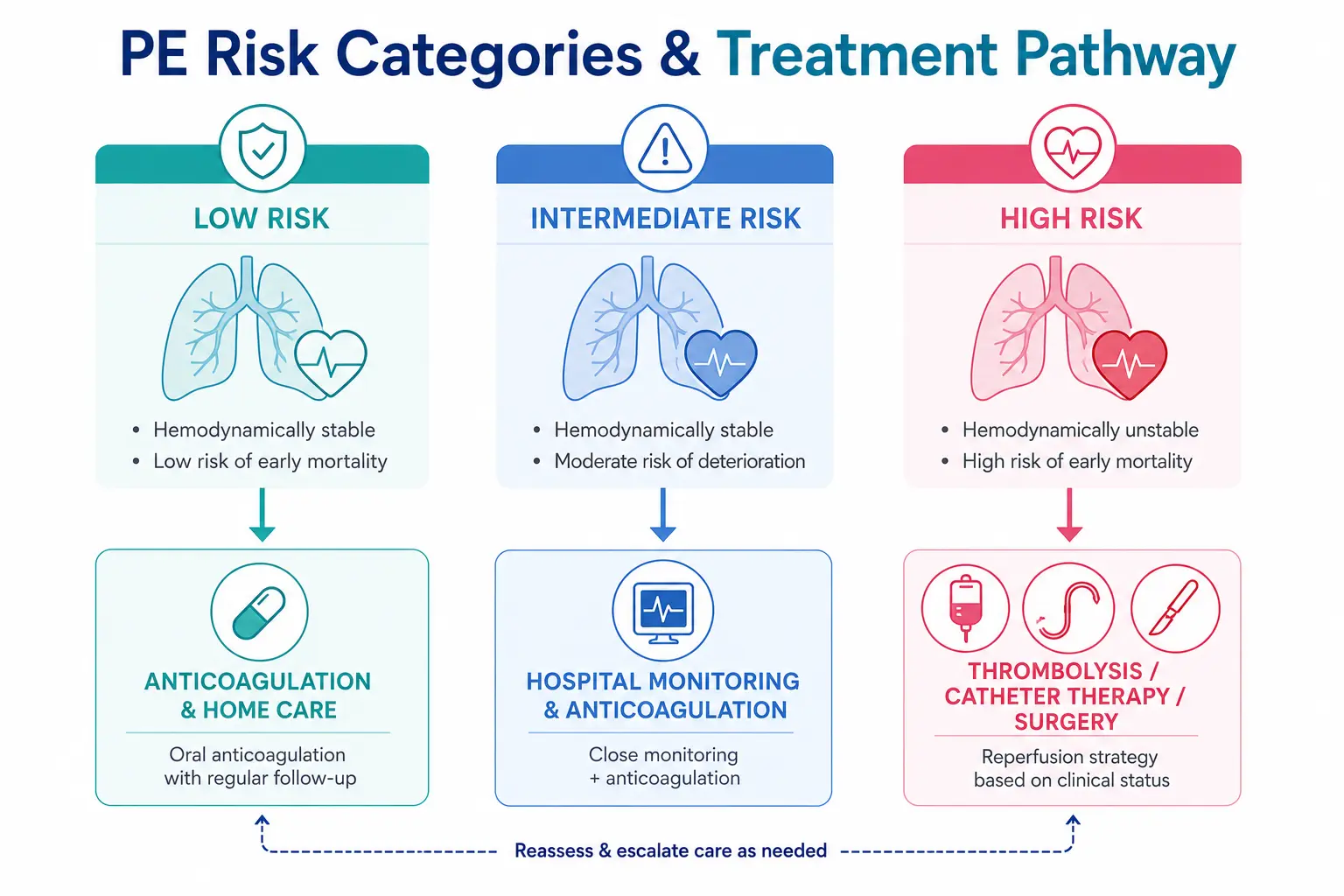
Pulmonary embolism treatment in Delhi ranges from blood-thinning medication for stable patients to emergency clot removal for those in shock, with the choice driven by risk category rather than clot size alone.
Interventional pulmonary embolism treatment
Interventional pulmonary embolism treatment uses catheter-based techniques to remove or dissolve the clot directly, offering a less invasive alternative to open surgery for patients who need more than anticoagulation alone.
- Catheter-directed thrombolysis (CDT): A catheter delivers clot-dissolving medication directly into the pulmonary artery, lowering the bleeding risk compared with systemic (IV) thrombolysis
- Mechanical thrombectomy: A catheter-based device physically removes or aspirates the clot without thrombolytic drugs, useful when bleeding risk is high
- Ultrasound-assisted thrombolysis: Combines low-dose clot-dissolving medication with ultrasound energy to break down the clot faster, using an even lower drug dose
- IVC filter placement: A small filter is placed in the inferior vena cava to catch future clots in patients who cannot safely take anticoagulants
These catheter-based options are typically offered to intermediate-high and high-risk patients, particularly when systemic thrombolysis has failed or carries too high a bleeding risk, and Dr. Mittal performs these procedures in the cardiac catheterisation lab at Fortis Hospital, Shalimar Bagh.
Surgical Treatment Options for Pulmonary Embolism
Surgical treatment for pulmonary embolism is reserved for the most severe, life-threatening clots that don’t respond to medication or catheter-based therapy, and it involves physically removing the clot through open surgery.
- Surgical pulmonary embolectomy: Open-heart removal of the clot, typically performed on cardiopulmonary bypass; used for very large, unstable PE that hasn’t responded to thrombolysis or is too risky for it
- ECMO (extracorporeal membrane oxygenation): Temporary mechanical circulatory support for patients in cardiac arrest or severe shock, used to stabilise the patient before or during surgery
- Combined surgical and catheter approach: In select complex cases, surgical embolectomy is paired with catheter-based clearance for clots extending into multiple lung segments
Surgery remains the last resort on the treatment ladder, most patients recover fully with anticoagulation or catheter-based therapy, and Dr. Mittal reserves open surgical pulmonary embolism treatment for the small number of cases where it’s genuinely the safer option.
What Are the Pulmonary Embolism Treatment Drugs?
Pulmonary embolism treatment drugs fall into two broad categories: anticoagulants (blood thinners) that prevent new clot growth, and thrombolytics (clot busters) that dissolve existing clots.
| Drug Category | Common Examples | Purpose |
| Initial parenteral anticoagulants | Low-molecular-weight heparin, unfractionated heparin, fondaparinux | Rapid clot-growth prevention immediately after diagnosis |
| Oral anticoagulants (DOACs) | Rivaroxaban, apixaban, dabigatran | Preferred over vitamin K antagonists for most patients to prevent recurrent clots |
| Vitamin K antagonists | Warfarin | Used when DOACs are unsuitable, requires regular INR monitoring |
| Thrombolytics | Alteplase, tenecteplase, urokinase | Dissolve clots rapidly in high-risk or selected intermediate-risk PE |
Thrombolytic pulmonary embolism treatment drugs carry a real bleeding risk, so they are reserved for patients whose right heart is failing or whose blood pressure has dropped.
Pulmonary Embolism Treatment Cost in Delhi
The cost of pulmonary embolism treatment depends on the severity of the clot and the treatment required. A personalised estimate can be provided after imaging and clinical evaluation.
Factors affecting the pulmonary embolism treatment cost include:
- Severity and risk category of the pulmonary embolism
- Type of treatment (anticoagulation, thrombolysis, or thrombectomy)
- ICU admission and hospital stay
- Diagnostic tests and imaging
- Underlying medical conditions and overall health
A detailed cost estimate is provided once the diagnosis and treatment plan have been finalised. You can review indicative pricing for related vascular procedures on our treatment cost pages.
Why Choose Dr. Dinesh Kumar Mittal for Pulmonary Embolism Treatment in Delhi?
Choosing the right specialist is an important part of successful pulmonary embolism treatment in Delhi. Patients looking for an experienced CTVS surgeon in Delhi often consider factors such as expertise in endovascular procedures, access to advanced cardiac care, and evidence-based treatment planning. People across Delhi NCR choose Dr. Dinesh Mittal beacuse:
- 25+ years of cardiothoracic and vascular surgical experience, including complex clot and embolism management
- Fellowship in Endovascular Stenting, Milan, Italy, directly relevant to catheter-based pulmonary embolism treatment
- Access to a 24/7 cardiac catheterisation lab, cardiac ICU, and ECMO support at Fortis Hospital, Shalimar Bagh
- Experience managing PE alongside related conditions such as deep vein thrombosis, coronary artery disease, and peripheral artery disease
- A structured, guideline-based approach rather than a one-size-fits-all protocol
Book a Consultation for Pulmonary Embolism Treatment in Delhi
If you or a family member has unexplained breathlessness, chest pain, or a leg that is suddenly swollen and painful, do not wait for symptoms to pass on their own. Early pulmonary embolism treatment saves lives and prevents long-term complications such as chronic thromboembolic pulmonary hypertension.
During your consultation, Dr. Mittal will review your imaging and clotting risk, explain which treatment pathway applies to your specific PE category, and outline recovery and follow-up anticoagulation, including how it may interact with related conditions such as atrial fibrillation.
Frequently Asked Questions
What guidelines are used for pulmonary embolism treatment? expand_more
Pulmonary embolism treatment follows the 2019 ESC/ERS guidance and the 2026 AHA/ACC/CHEST joint guideline, both of which base treatment decisions on risk category.
How long does acute pulmonary embolism treatment take to show improvement? expand_more
Breathlessness and chest pain often start improving within 24 to 48 hours of starting anticoagulation or thrombolysis, although full clot resolution can take weeks to months, monitored with follow-up imaging.
How long do I need to stay on pulmonary embolism treatment drugs? expand_more
Most patients need at least three to six months of anticoagulation. Those with ongoing risk factors, such as cancer or a clotting disorder, may need extended or indefinite treatment, as recommended by current guidelines.
Can pulmonary embolism come back after treatment? expand_more
Yes, recurrence is possible, particularly if anticoagulation is stopped too early or underlying risk factors (immobility, clotting disorders, cancer) are not addressed. Regular follow-up reduces this risk.
How do I book a consultation with Dr. Dinesh Kumar Mittal? expand_more
You can book an appointment with Dr. Dinesh Kumar Mittal by contacting us directly through the number available on this website or using our online appointment booking facility.

Dr. Dinesh Kumar Mittal's Content Team
Dr. Dinesh Kumar Mittal's medical content team specialises in creating accurate, clear, and patient-focused healthcare content. With strong clinical understanding and expertise in technical writing and SEO, the team translates complex medical information into reliable, accessible resources that support informed decisions and uphold Dr. Mittal's commitment to quality care.
This content is reviewed by Dr. Dinesh Kumar Mittal
Related Conditions

Deep Vein Thrombosis (DVT) Treatment in Delhi
Deep Vein Thrombosis (DVT) is a medical condition in which a blood clot forms in the deep veins of the body,…
Atrial Fibrillation Treatment in Delhi
Atrial fibrillation (AFib) is one of the most common types of heart rhythm disorders, affecting nearly 33.5 million people worldwide. It…
Arrhythmia Treatment in Delhi
Arrhythmia treatment in Delhi is available for patients experiencing an irregular, fast, or slow heartbeat that disrupts the heart’s normal…
Peripheral Artery Disease Treatment in Delhi
Peripheral artery disease (PAD) is a circulatory condition in which plaque builds up inside the arteries supplying the legs, progressively…
Related Blogs
पेसमेकर क्या होता है? जानिए पेसमेकर की ज़रूरत कब पड़ती है (What is Pacemaker in Hindi)
पेसमेकर (Pacemaker), ये नाम सुनते ही ज़्यादातर लोगों के मन में एक ही सवाल कौंधता…
Read Article →
ECG Test: What It Measures and Why It Matters?
Most people have had an ECG at some point, perhaps before a surgery, after chest…
Read Article →
Pacemaker Surgery Cost In Delhi | Dr. Dinesh Kumar Mittal – Dr. Dinesh Mittal
A normal, healthy heart has internal pacemakers that regulate its rhythmic contractions. Pacemakers play…
Read Article →
Can Biventricular Pacemaker Implantation Improve Heart Function?
Heart failure, a condition affecting millions, primarily occurs in older adults but can impact…
Read Article →
Can a Smartwatch Really Detect a Heart Problem?
Today’s stressful and busy lifestyle has prompted many people to adopt healthy habits. Besides…
Read Article → WhatsApp