
Endovascular Repair Surgery in Delhi
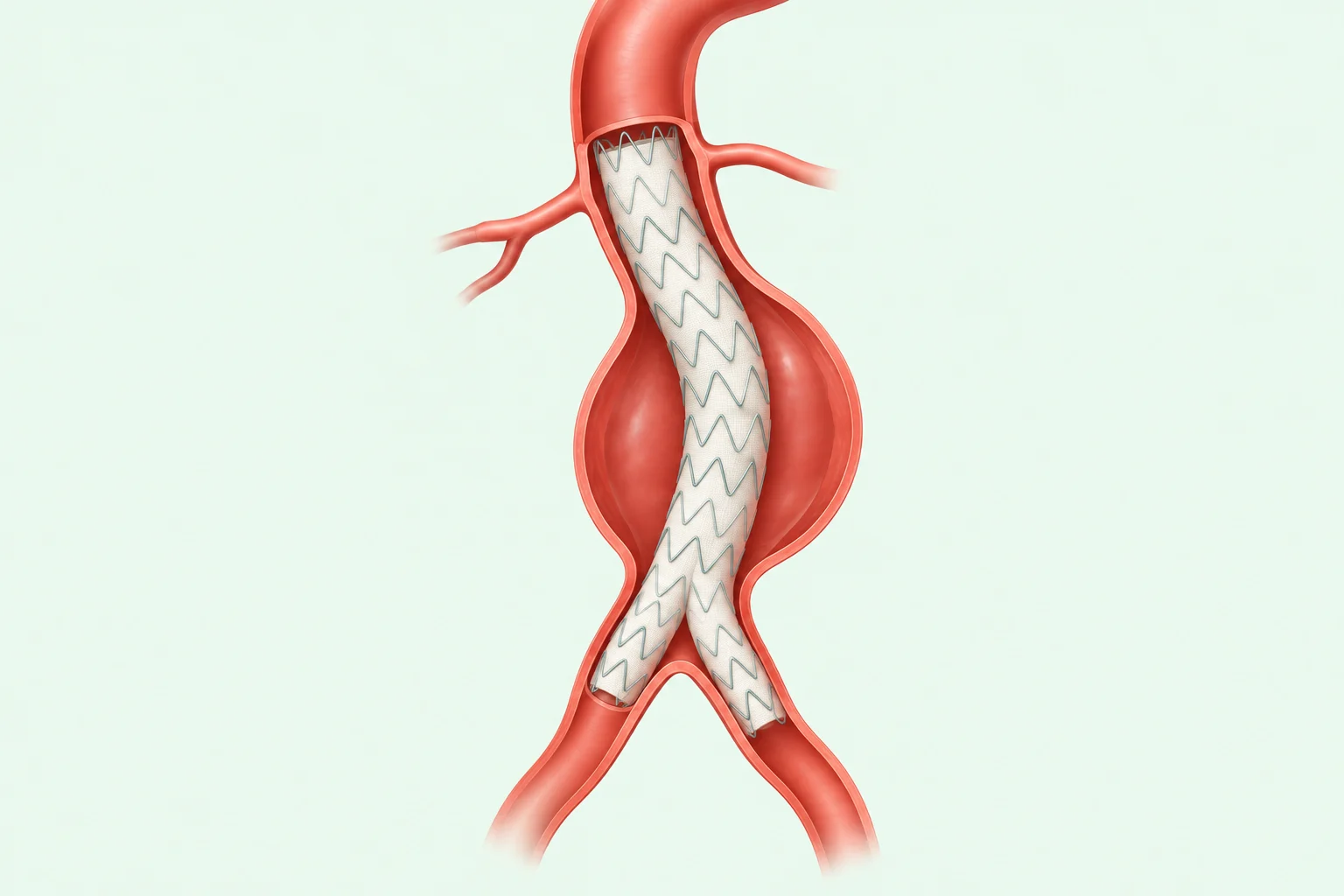
Endovascular repair surgery is a minimally invasive way to treat a weakened, bulging aorta, the body’s main blood vessel. Instead of opening the abdomen or chest, the surgeon guides a fabric-covered stent graft through small punctures in the groin and places it inside the aorta. Blood then flows through the graft, and the weak wall is protected from rupture.
An aortic aneurysm often causes no symptoms until it becomes dangerous. Finding it early and choosing the right repair method can be life-saving.
Dr. Dinesh Kumar Mittal, Director and Head of Cardiothoracic and Vascular Surgery at Fortis Hospital, Shalimar Bagh, Delhi, is equally experienced in endovascular and open aortic surgery. He advises the approach that best suits each patient’s anatomy and health.
Request a Consultation
What Is Endovascular Repair Surgery?
Endovascular repair surgery is a catheter-based procedure that places a stent graft inside a diseased aorta to seal off an aneurysm from the inside. The stent graft is a metal mesh tube covered in synthetic fabric. It takes the pressure off the weakened wall and lowers the risk of rupture.
Endovascular means “inside the blood vessel”, so the surgeon works through the vessel without a large incision. The two main types are:
- EVAR (endovascular aneurysm repair): for aneurysms in the abdominal aorta
- TEVAR (thoracic endovascular aortic repair): for aneurysms or tears in the chest aorta
For patients considering endovascular repair surgery in Delhi, EVAR or TEVAR may offer a minimally invasive approach to treating selected aortic aneurysms and reducing the risk of serious complications.
Which Conditions Does Endovascular Repair Treat?
Endovascular repair mainly treats abdominal and thoracic aortic aneurysms. It can also treat selected aortic dissections and some blockages or injuries in large arteries.
- Abdominal aortic aneurysm (AAA)
- Thoracic aortic aneurysm
- Selected aortic dissections
- Aneurysms of the iliac arteries
- Traumatic aortic injury (in emergencies)
You can read more in our guide on aortic intervention.
When Is Endovascular Repair Recommended?
Endovascular repair is usually recommended when an aneurysm is large enough to risk rupture and its shape suits a stent graft. Trials of elective repair have generally treated aneurysms of 5.5 cm or more. Smaller aneurysms are often monitored with regular scans.
It may be suggested when:
- The aneurysm is 5.5 cm or larger, or growing quickly
- Symptoms such as new abdominal, back or chest pain are present
- The patient is older or has heart or lung disease, making open surgery riskier
- Scans show the neck and access arteries are suitable for a stent graft
Seek urgent care for sudden, severe abdominal, back or chest pain, dizziness or fainting. These can signal a rupture. See when an aneurysm repair is needed.
Endovascular Repair vs Open Aortic Surgery: What Is the Difference?
Endovascular repair uses small groin punctures and offers a quicker recovery, while open surgery replaces the aorta through a larger incision and is more durable long term. Neither is better for everyone.
| Feature | Endovascular Repair (EVAR/TEVAR) | Open Aortic Surgery |
| Approach | Small groin punctures | Large abdominal or chest incision |
| Hospital stay | Usually 2 to 3 days | Usually 7 to 10 days |
| Recovery | About 2 to 3 weeks | About 4 to 6 weeks |
| Follow-up scans | Lifelong surveillance needed | Less frequent |
| Best for | Suitable anatomy, higher-risk patients | Complex anatomy, younger fit patients |
In the UK EVAR 1 trial, 30-day mortality was 1.8% after endovascular repair against 4.3% after open repair. However, the 15-year results showed inferior late survival with EVAR, so lifelong surveillance and re-intervention if needed are important. Regular check-ups matter after endovascular repair.
Endovascular Repair Surgery Procedure
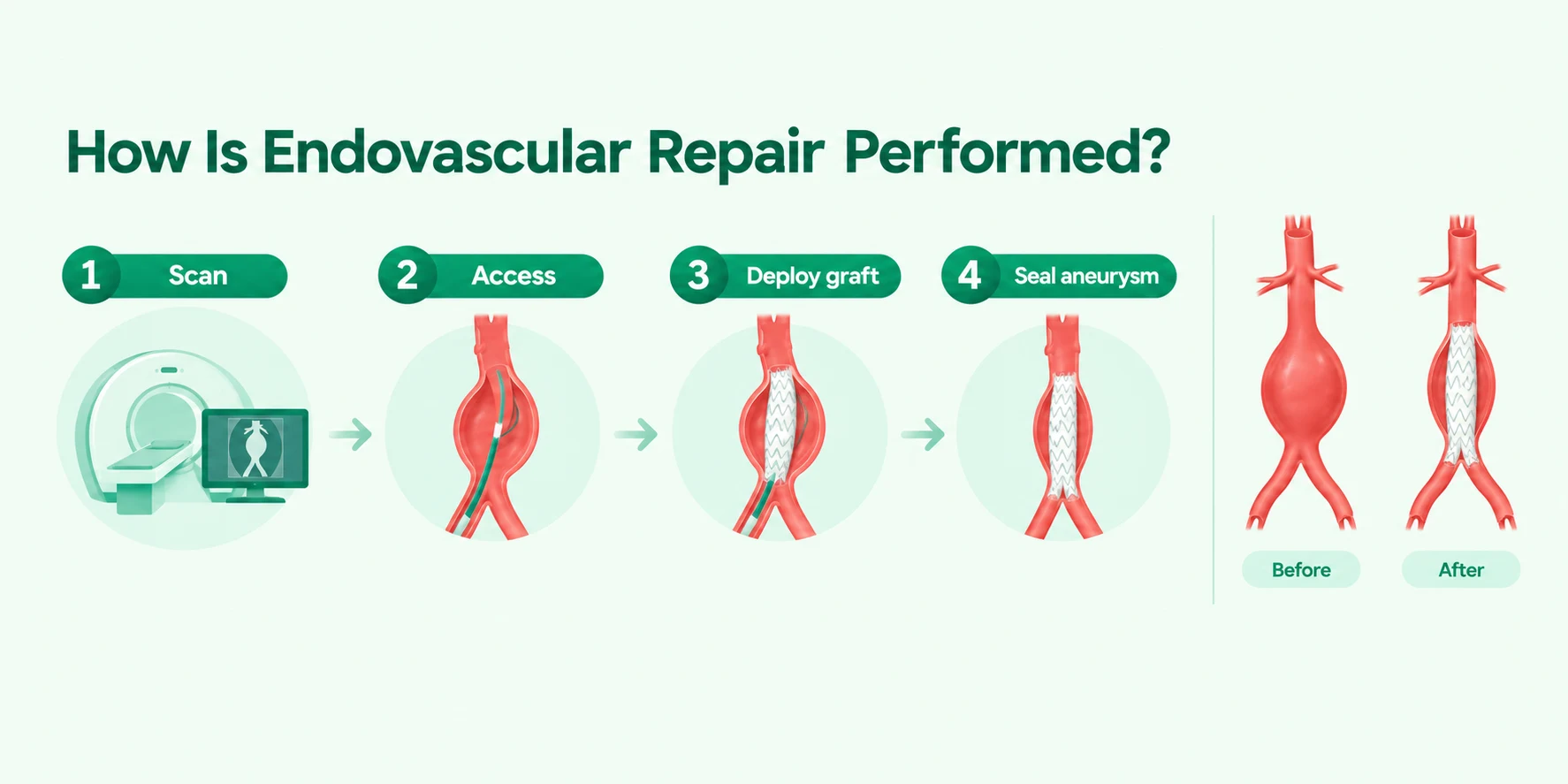
The surgeon guides a folded stent graft through the groin arteries to the aneurysm using live X-ray imaging, then opens it to line the aorta. The operation usually takes two to four hours.
- Planning scans: CT angiography maps the aorta, and the graft is chosen to fit your anatomy.
- Anaesthesia: Spinal, local with sedation, or general anaesthesia, as advised.
- Access: Small punctures or cuts are made in the groin arteries.
- Delivery: Using X-ray imaging and contrast dye, the folded graft is guided to the aneurysm.
- Deployment: The graft opens and anchors above and below the aneurysm.
- Check: A final angiogram confirms there is no leak, and the access sites are closed.
Understanding each step of the EVAR or TEVAR procedure can help patients prepare for treatment and discuss the most suitable approach with their vascular specialist.
What Is Recovery Like After Endovascular Repair?
Most patients go home within two to three days and recover in about two to three weeks, compared with four to six weeks after open repair. Full recovery can take longer. Our aneurysm guide notes that EVAR recovery takes 2 to 3 weeks.
- Walk daily from the first day, and avoid heavy lifting for about four weeks
- Return to desk work in one to two weeks, if you feel well
- Attend CT or duplex scans, typically at one month, at 12 months, then yearly
- Stop smoking, and control blood pressure, cholesterol and diabetes
Regular follow-up imaging, healthy lifestyle habits, and proper recovery guidance are important for monitoring the stent graft and supporting long-term aortic health.
Endovascular Repair Surgery Risks
Risks include bleeding, infection, kidney strain from contrast dye, blood clots and endoleak, a leak of blood around the graft. Serious complications are uncommon, but they are discussed with you before surgery.
- Endoleak: blood still flows into the aneurysm sac. Many are minor, and some need a further procedure.
- Graft problems: movement, kinking or blockage over time.
- Groin issues: bruising, bleeding or infection.
- Re-intervention: a small proportion of patients need a second procedure, so surveillance scans are essential.
Understanding these potential complications helps patients weigh the benefits and limitations of endovascular treatment and recognise why regular follow-up imaging remains an important part of long-term care.
Endovascular Repair Surgery Cost in Delhi
Endovascular repair surgery in Delhi costs generally starts from ₹3,50,000 and goes way beyond, depending on the graft type, the aorta segment treated, hospital stay and room category.
- Type and number of stent grafts (simple, branched or fenestrated)
- Abdominal (EVAR) or chest (TEVAR) repair
- Pre-operative scans and tests
- ICU and room category
- Medicines and follow-up imaging
Most insurers cover repair of a diagnosed aneurysm. Confirm pre-authorisation and cashless eligibility before admission.
Why Do Patients Trust Dr. Dinesh Kumar Mittal for Endovascular Repair in Delhi?
Patients choose Dr. Mittal for his experience in both endovascular and open aortic surgery, which lets him recommend the safer option rather than the only one he offers.
- 25+ years of cardiothoracic and vascular surgical experience
- MCh in Cardiothoracic Surgery, AIIMS, New Delhi
- Fellowship in Endovascular Stenting, Milan, Italy
- Involved in building one of North India’s most comprehensive aortic intervention programmes
- A cath lab, cardiac ICU and 24/7 emergency cardiac care at Fortis Hospital, Shalimar Bagh
His approach prioritises accurate imaging, honest advice and long-term follow-up.
Book a Consultation for Endovascular Repair Surgery in Delhi
An early consultation lets you plan a repair calmly instead of facing an emergency. If a scan has shown an aneurysm, or you have risk factors such as smoking, high blood pressure or a family history, a specialist opinion is the best next step.
You will receive:
- A review of your CT, ultrasound and medical history
- An assessment of aneurysm size, shape and rupture risk
- A clear comparison of endovascular, open and monitoring options
- A discussion of recovery, follow-up and costs
The right treatment depends on the aneurysm’s location, size, anatomy and your overall health. A specialist evaluation can help you understand your options and make an informed decision before complications arise.
Frequently Asked Questions
Is endovascular repair a major surgery? expand_more
It is a less invasive procedure than open surgery, performed through small groin punctures with no large incision. It still needs skilled planning and specialist follow-up.
How long does an endovascular stent graft last? expand_more
The stent graft is permanent. It needs lifelong surveillance scans, as some patients develop leaks or graft movement that require treatment.
Am I suitable for endovascular repair? expand_more
Suitability depends on the aneurysm's shape, the health of your groin arteries and your overall fitness. A CT angiogram decides this.
What is the difference between EVAR and TEVAR? expand_more
EVAR repairs the aorta in the abdomen. TEVAR repairs the aorta in the chest.
How do I book a consultation with Dr. Dinesh Kumar Mittal? expand_more
You can book by contacting Fortis Hospital, Shalimar Bagh directly or using their online appointment facility.

Dr. Dinesh Kumar Mittal's Content Team
Dr. Dinesh Kumar Mittal's medical content team specialises in creating accurate, clear, and patient-focused healthcare content. With strong clinical understanding and expertise in technical writing and SEO, the team translates complex medical information into reliable, accessible resources that support informed decisions and uphold Dr. Mittal's commitment to quality care.
This content is reviewed by Dr. Dinesh Kumar Mittal
Related Blogs

Varicose Veins Exercises: Best Movements to Improve Blood Flow
If you are also dismissing varicose veins as just a cosmetic issue, you might need…
Read Article → WhatsApp